WKU Storm Chase 2016 – Day 8

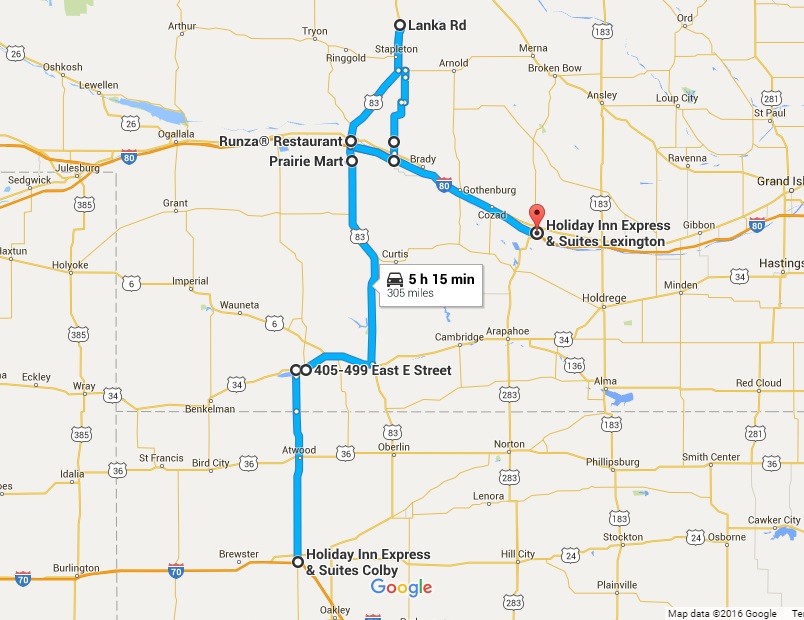
Today's route map. An interactive version is available below

Today’s route map. An interactive version is available below

Morning model data indicated a broad area of severe risk, but two specific areas of interest became clear to us. A surface low began to form overnight in northeast Colorado as a result of the upper-level trough moving in from the west. A dryline extended from this low down through southwest Nebraska, eastern Colorado, and the western Panhandle region. Ample moisture on the boundary indicated storms would likely fire from the northern Plains to Mexico. However, deepening of the low throughout the day, as well as the presence of low-level convergence and backing of low-level wind profiles provided by this low led us to choose southwest Nebraska as a target region. It was argued that the central Texas panhandle may provide some organized convection, but the lack of a decent cap over the region indicated that storms would be messy and numerous, which makes them difficult to chase and observe. Combined with the sheer distance from the target our hotel was, this eliminated the Texas panhandle as a target.

After lunch in Colby, KS, the same city as our hotel was located, we headed north to North Platte, NE. We set up in an initiation holding pattern just south of the city near Lake Malone and waited. Similar to yesterday, initiation took much longer than expected for the given environment. As better shear entered the region, all signs pointed to an explosive day. By 5:50 PM CST, the cap broke and we began chasing the initiated convection northeast. Storms far to our north were much more impressive, but in an area that harbored far worse chasing conditions such as hilly terrain and few side roads.

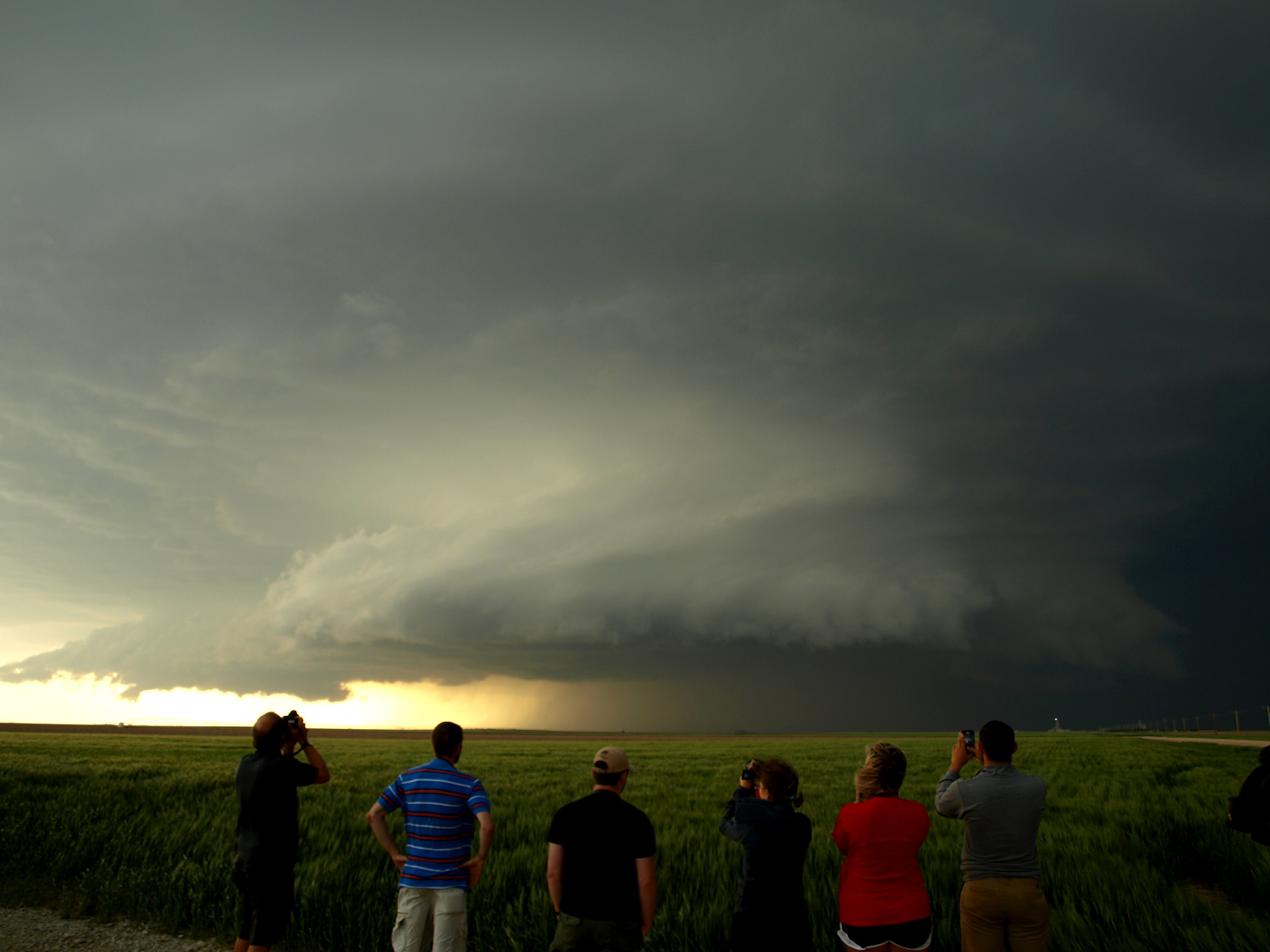
We proceeded to Maxwell, NE to view the storms (Figure 1), which seemed to struggle inexplicably as they moved northeast. After some truly harrowing chasing (and excellent driving) on the sandy back roads of central Nebraska. We cycled through chasing about three cells. By the time we were able to return to pavement, most of the cells had weakened, and one cell to the south seemed more impressive. We turned around and viewed this storm from the side to try and gain an understanding of why the storms the initiated in this environment struggled so much (Figure 2).
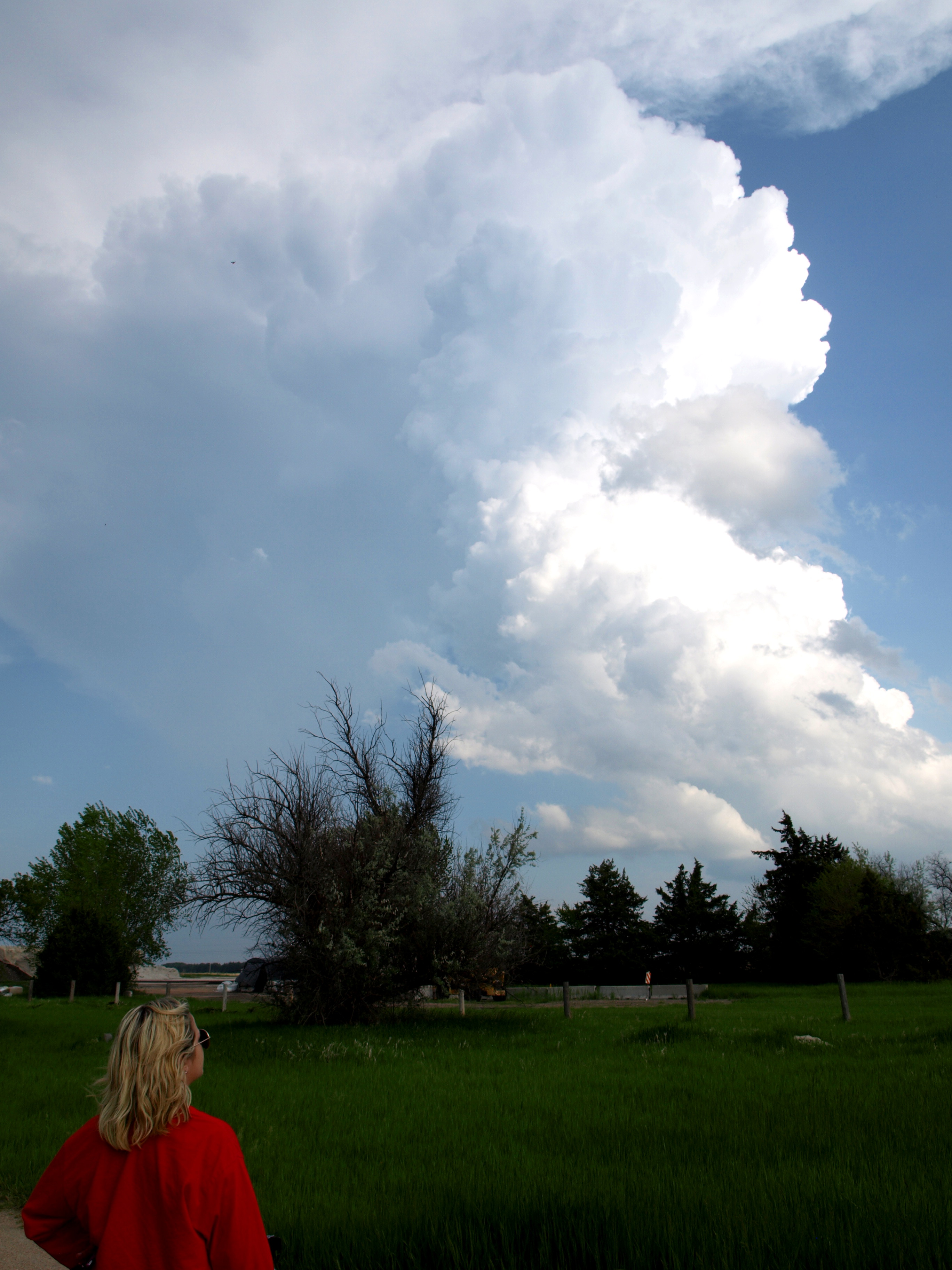
Figure 1: WKU Meteorology student Jessica Dobson documents an initiating convective updraft in Maxwell, NE

Figure 1: WKU Meteorology student Jessica Dobson documents an initiating convective updraft in Maxwell, NE

Figure 2: A twisting, bent updraft visible in the last storm of the day

Figure 2: A twisting, bent updraft visible in the last storm of the day

The helical structure of the updraft and the bending back that took place in these cells caused many of the updrafts to quite literally rip off the tops of the storms and kill them. This would usually indicate a high-shear, low-CAPE environment, but CAPE was reaching the 3500 J/kg threshold, which would sustain updrafts even in a higher-shear environment. After some research, we determined that a likely cause was a shortwave trough rotating through the southwest Nebraska region that was visible on water vapor imagery. This trough would have provided sinking air to the target area from above. This, combined with impressive instability, caused updrafts to be limited in height and, as a result, these updrafts were forced to bend backwards. The high shear in these storms then had ample time time twist and distort these updrafts until the were ripped free from their associated thunderstorms. This explanation is speculation, but it does provide a reasonable answer for the lack of HP and sustained rotating supercells.

After a nutritious dinner at Runza in North Platte, NE, we headed home for the night in Lexington, NE. We will likely target the Kansas-Oklahoma border tomorrow, as a more classic setup seems to be moving into the region.

-Isaac Bowers

Click on this link for an interactive chase map!

Posted in U.S. Weather | Tagged , , , , | Comments Off on WKU Storm Chase 2016 – Day 8

WKU Storm Chase 2016 – Day 7

Today's route map. An interactive version is available below

Today’s route map. An interactive version is available below

A forecast discussion last night in partnership with College of DuPage at our hotel pointed out an area of instability ribboning from Amarillo, through southwest Kansas, and north to the Cheyenne Ridge in northeast Colorado. A moisture axis paralleled this ribbon of instability, and upper-level divergence over western Kansas  would encourage lift along the dryline. This lift would provide enhancement to an otherwise similar setup to yesterday, assisting storms in breaking the cap. Both HRRR and NAM model data placed a strong convective cell over western Kansas, and supportive shear values and lapse rates indicated this cell would likely be supercellular and at least contain large hail. We targeted Garden City to await initiation and departed at 9:15 AM MT.

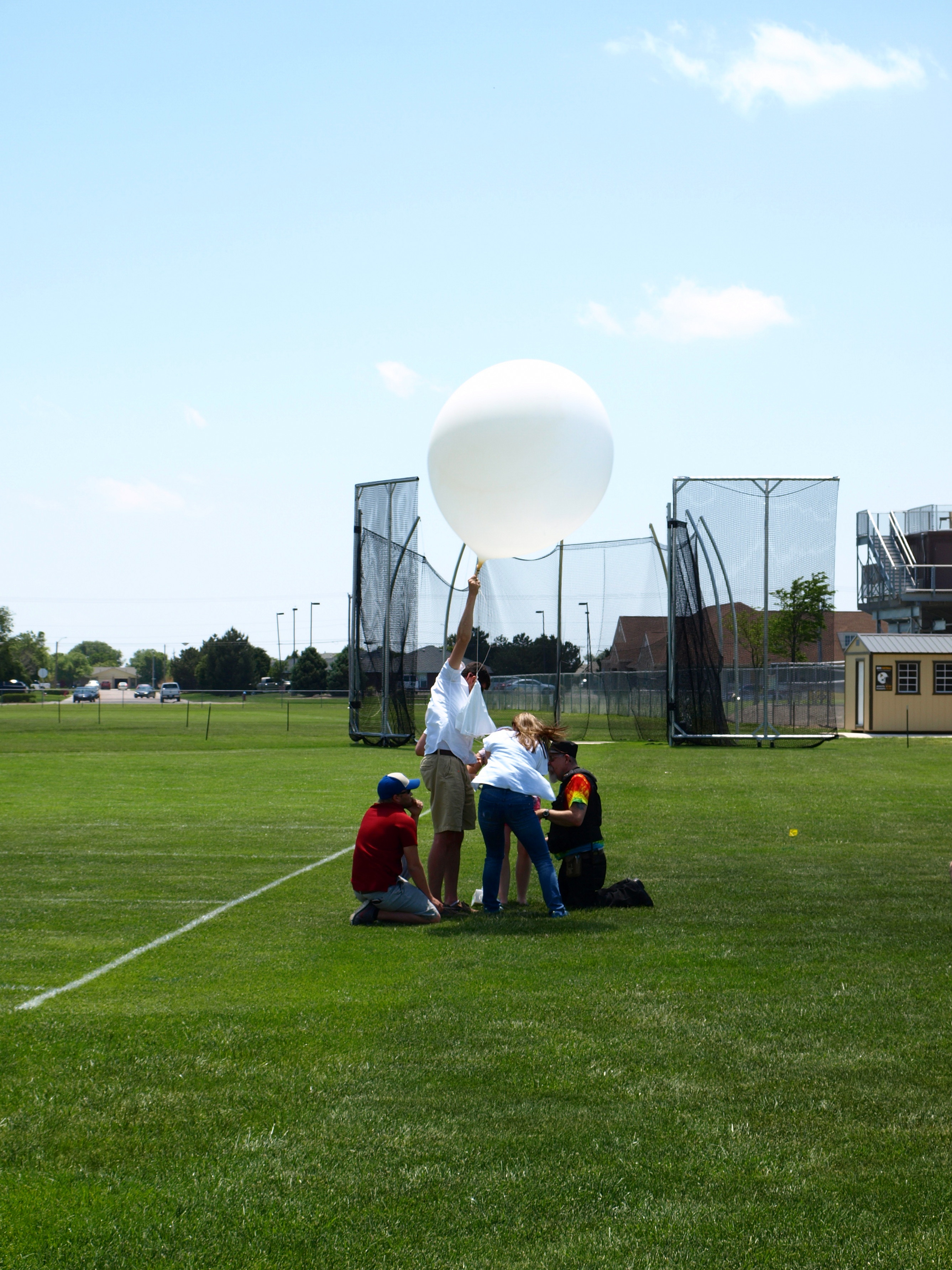
After lunch in Garden City, we met once again with our friends at the College of DuPage to watch a weather balloon launch (Figure 1). This balloon would help us diagnose the strength of the cap over the region as well as bulk shear. Preliminary data observed dry adiabatic lapse rates or greater in the low and mid levels, indicating quite an unstable environment. We left our friends in Garden City and headed northeast to Marienthal, KS to await initiation.

Figure 1: Dr. Victor Gensini of the College of DuPage launches a radiosonde from Garden City, KS

Figure 1: Dr. Victor Gensini of the College of DuPage launches a radiosonde from Garden City, KS

After arriving in Marienthal at 3:30 PM CST, radar indicated a dryline boundary colliding with an axis of moisture convergence over the northwest Kansas region. After waiting an unusually long time for initiation for such a ripe environment, SPC Mesoanalysis indicated an area of mixed-layer CIN capping the region, which would explain the lack of convection. Initiation finally occurred directly west of us at 5:45 PM CST. After viewing one storm after another from a park in Marienthal (Figure 2), radar indicated weak rotational couplets on the backside of three thunderstorms. We moved to intercept the strongest of these couplets, which became tornado warned on our way.

Figure 2: Convective initiation west of Marienthal, KS

Figure 2: Convective initiation west of Marienthal, KS

While chasing the storm on KS-25, a funnel cloud developed and visibly touched down. However, the storm contained an unusually high lightning threat, which prevented us from exiting the vehicle to document the tornado.

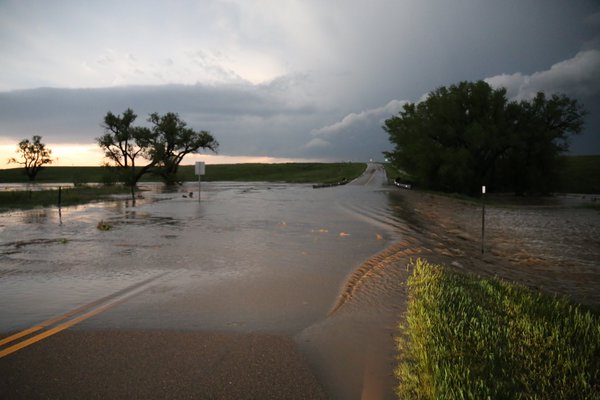
We continued to chase the nearly stationary storm for several hours, and documented its incredible structure (Figure 3) until the light faded and we were forced to scrub the chase near 9:30 PM CST. The storm total accumulation product indicated over 8 inches of rain had fallen over 4 hours, and this became evident as we attempted to travel north to our hotel in Colby, KS. We ran into a very flooded wash on KS-25 and were forced to turn around (Figure 4).

Figure 4: WKU students, along with Dr. Josh Durkee, document the Leoti, KS supercell

Figure 3: WKU students, along with Dr. Josh Durkee, document the Leoti, KS supercell

Figure 4: Flooding on KS-25 just south of the Logan County line (Photo credit: Grady Dixon)

Figure 4: Flooding on KS-25 just south of the Logan County line (Photo credit: Grady Dixon)

Tomorrow looks to be the most active day of chasing thus far, and we will likely proceed to southern Nebraska to intercept storms produced by a deep upper-level trough.

-Isaac Bowers

Click on this link for an interactive chase map

Posted in U.S. Weather | Tagged , , , , , | Comments Off on WKU Storm Chase 2016 – Day 7

WKU Storm Chase 2016 – Day 6

Today's route map. An interactive map is available below

Today’s route map. An interactive map is available below

Marginal instability and low but sufficient moisture, as well as a moisture boundary moving into eastern Colorado led us to target Colorado Springs this morning. The lack of upper level divergence, lower level convergence, and frontal boundaries forced us to rely on the topography of the Rocky Mountains for lift. Low-level southerly flow would push moisture and instability north against the mountains, and an upper-level trough provided northerly flow, which would push any storms that formed southeastward along the moisture boundary. This led us to go ahead and book a hotel in Lamar, CO for the night.

We departed Raton, NM at 9:15 AM MT and arrived in Colorado Springs, CO for lunch at 12:15 PM MT. We enjoyed a quick Jimmy Johns and proceeded to the eastern suburbs of Colorado Springs to await initiation by 1:15 PM. Mesoscale analysis at 2:30 PM indicated an axis of instability stretching from Amarillo to Colorado Springs, and a moisture boundary approaching from the south was visible on radar, as well as to the naked eye. A cumulus field to the south demarcated that boundary. If a storm was going to occur, it would occur here.

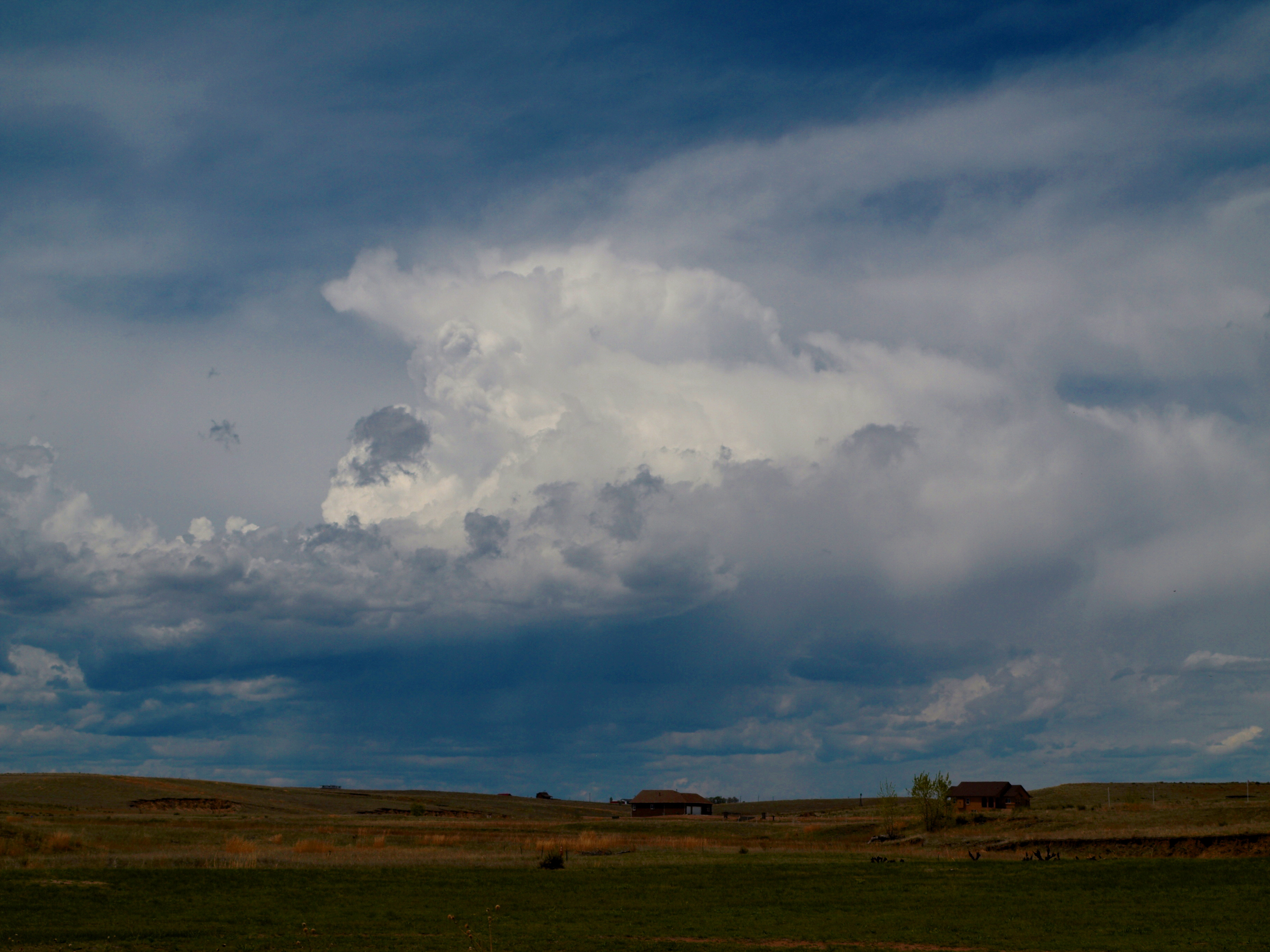
By 3:45 PM, after waiting nearly two and a half hours for initiation, it became clear that initiation would likely not occur. Several updrafts attempted to rise (Figure 1), but instability was too low for updrafts to break the cap, even with topographic forcing and moisture present. We decided to proceed to our hotel for the evening.

P1011660

Figure 1: Convection attempts to initiate east of Colorado Springs

Tomorrow appears to be the beginning of a very active few days for us. An upper-level trough will begin to dig across the region, and the central Plains will see excellent moisture return over the next day or two. We will likely target the area of highest instability in southwest Kansas tomorrow afternoon. Stay tuned!

-Isaac Bowers

Click this link for an interactive chase map!
Posted in U.S. Weather | Comments Off on WKU Storm Chase 2016 – Day 6

WKU Storm Chase 2016 – Day 5

Today's route map. An interactive version is available below

Today’s route map. An interactive version is available below

Although morning observations indicated a decent boundary in extreme south Texas and model data suggested sufficient instability to produce thunderstorms, sheer distance and the necessity to set up for our next few events prevented us from traveling there. We instead decided to side with slightly longer range data that indicated moisture return and trough placement over the next few days may be sufficient for initiation near eastern Colorado and western Kansas by Saturday or Sunday. We began driving to Raton, NM for the night at 9:15 AM MT

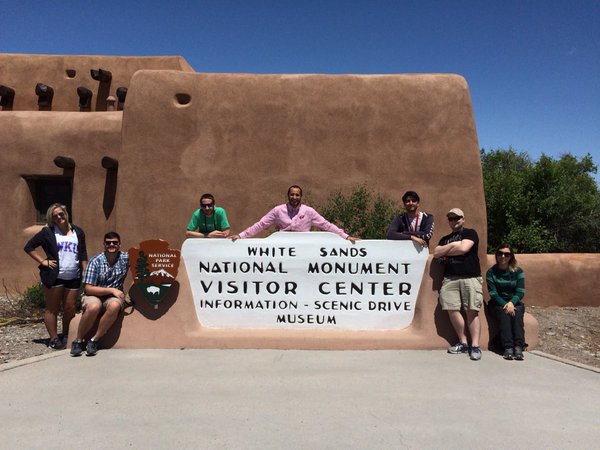
Since we would not be chasing throughout the day, we decided to take advantage of the beauty rural New Mexico offered and visit White Sands National Monument in southeast New Mexico. On the way, we crossed the Organ Mountains and traveled through the White Sands Missile Range (Figure 1). After a brief but harrowing experience at the US Customs and Border Patrol checkpoint just south of White Sands due to a Brazilian passport mishap, we arrived at the monument’s Visitor Center (Figure 2).

The Organ Mountains with White Sands Missile Range HQ visible in the center left

The Organ Mountains with White Sands Missile Range HQ visible in the center left

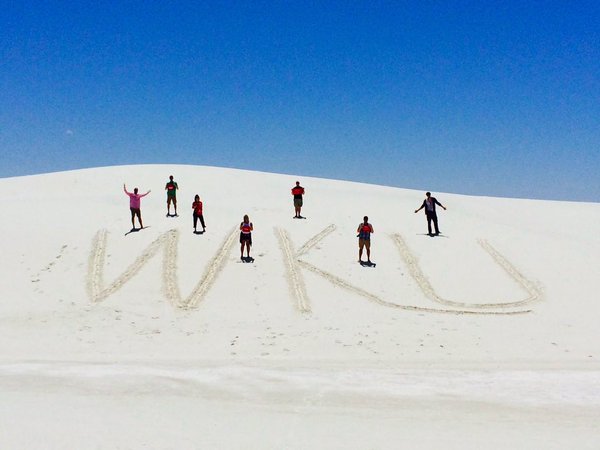
Figure 2: The storm chase team poses at the White Sands National Monument (Photo credit: Josh Durkee)

Figure 2: The storm chase team poses at the White Sands National Monument (Photo credit: Josh Durkee)

We paid a small entrance fee and began the Dunes Drive through the monument. The sand was nearly blinding, but once we stopped and removed our shoes, we found the desert floor to be remarkably cool and wet. It was possible to build sandcastles in this sand! After Dr. Dixon tested the sledding possibilities (Figure 3), we decided to leave our mark on that beautiful place (Figure 4).

Figure 3: Dr. Dixon tests out a friendly stranger's sled

Figure 3: Dr. Dixon tests out a friendly stranger’s sled

Ci138rLXAAARfa5

Figure 4: WKU Storm Chasers leave their mark on White Sands

After a stop in nearby Alamogordo for lunch at Blake’s Lotaburger, we traveled northbound until we happened to encounter the only severe storm in the Plains near Fort Union National Monument in north central New Mexico (Figure 5). While not tornadic, the storm did drop some pea size hail on us before we managed to snag a shot of the back side, when it gave us our second double rainbow in two days (Figure 6).

Figure 5: Severe thunderstorm over Fort Union National Monument

Figure 5: Severe thunderstorm over Fort Union National Monument

Figure 6: Rainbows on the back side of the Fort Union storm cell

Figure 6: Rainbows on the back side of the Fort Union storm cell

Tomorrow we trek further east to set up for what looks to be a chaseable day on Saturday. Stay tuned!

-Isaac Bowers

Click this link for an interactive chase map!

Posted in U.S. Weather | Tagged , , , , | Comments Off on WKU Storm Chase 2016 – Day 5

WKU Storm Chase 2016 – Day 4

Today's route map. An interactive link is provided below.

Today’s route map. An interactive link is provided below.

Morning observations indicated a stalled cold front along I-10 corridor, and model data suggested this front would be weakening throughout the day. Therefore, this cold front would become less of a forcing factor in afternoon thunderstorms. Yesterday’s convection along and south of the front also stabilized the atmosphere, so very little instability existed except in far west Texas where storms had been spotty the day before and cloudiness was reduced so ample heating could occur. This area of marginal instability coincided with the location of the center of convergence that had dropped into northern Mexico overnight, and indicated the area most likely to produce thunderstorms. We initially decided to target Big Bend National Park, since we needed topography and convergence to provide lift because of the greatly reduced instability.

The 11:30 AM CST SPC Convective Outlook update lowered the slight risk over our target area to marginal due to further reduction of expected instability and the persistent cloudiness that prevented surface heating. The only area that retained a slight risk was the El Paso region and the upper Mission Valley area. This, in conjunction with consistent HRRR data prompted us to change our target to the El Paso region by 12:30 AM CST.

We stopped briefly in Van Horn, TX after lunch in Fort Stockton, TX to await convection initiation and for those initiated storms to cross the border. Initiation occurred in northern Chihuahua, Mexico at around 4:30 pm CST, and we began our intercept course. Intercept occurred south of Alamo Alto, TX, less than 1/3 of a mile from the banks of the Rio Grande. Although the storm was neither tornadic nor severe, it was impressive to see the storm cross the Samalayuca Dune Fields to the south (Figure 1) and the structure of the storm provided some excellent photo opportunities (Figure 2).

Figure 1: Rain crossing the Samalyuca Dune Fields

Figure 1: Rain crossing the Samalyuca Dune Fields

Figure 2: Flavia Moraes photgraphs storm structure in Alamo Alto, TX

Figure 2: Flavia Moraes photographs storm structure in Alamo Alto, TX

As the storm crossed our path, we drove through the rain core to the other side. The back of the storm gave us a show in the form of a vivid double rainbow (Figure 3). With storms further to our south disintegrating after crossing the border, losing topographic lift, and entering a strongly capped environment, we headed north to El Paso for dinner at Rudy’s BBQ (Figure 4) and a well-deserved rest.

Figure 3: Double rainbow on the back side of our chased storm

Figure 3: Double rainbow on the back side of our chased storm

Figure 4: Texas brisket sandwich and potato salad at Rudy's BBQ, El Paso

Figure 4: Texas brisket sandwich and potato salad at Rudy’s BBQ, El Paso

The next few days look like some tourist-travel days as we wait for high pressure across the Central Plains to vacate and moisture to return to middle America. We plan to head north along I-25 and perhaps make a stop in White Sands, NM on our way to Colorado for the night. Stay tuned!

-Isaac Bowers

Click on this link to view an interactive chase map!

Posted in U.S. Weather | Tagged , , , , | Comments Off on WKU Storm Chase 2016 – Day 4

WKU Storm Chase 2016 – Day 3

Today's route map

Today’s route map – available in interactive form below

Our morning forecast discussion was done on the road after an 8:45 AM CST departure from Amarillo, TX. The convective outflow boundary from yesterday’s storm complex descended southward overnight, pushing moisture with it and containing higher dewpoints in the south central Texas region. A convergence zone associated with yesterday’s initiation also descended, and was located in the southeast corner of New Mexico and west central Texas. The setup is similar to yesterday in that all of yesterday’s forcing events existed today, although further south. Initiation was forecast to occur near the convergence zone in west central Texas and low level flow would push initiated storms southeast along the boundary. We therefore initially selected Big Lake, TX as our target.

Initiation occurred just northwest of Crane, TX, and we altered our course slightly to intercept the initial storm. We stopped in the parking lot of Rancherita Mexican Restaurant at the corner of Ranch-to-Market Road 2401 and TX 349 to view the rotating wall cloud the storm had dropped (Figure 1). We followed the storm south to County Road 111 to continue viewing, and the storm became tornado warned on our way there. (Figure 2).

Figure 1: Storm initiation north of Rankin, TX

Figure 1: Storm initiation north of Rankin, TX

Figure 2: Panorama of Rankin supercell as it became tornadic

Figure 2: Panorama of Rankin supercell as it became tornadic

In order to follow the storm, we moved south through Rankin, TX and headed east to stay in front of the storm on US 67. Once we reached Texon, TX, further severe development ahead of the storm created a cold pool that staunched the inflow of the storm we had initially chased, weakening it. We took shelter in Big Lake, TX as hail cores to the south and east prevented our movement. It had been raining there for nearly an hour, resulting in impressive flooding in the area. After the hail core weakened, we cut across the north edge of the storm and attempted to move further south to catch the back side of the storm.

We reached Barnhart, TX and turned south. We turned east on US 190 and followed a storm that blossomed to the east of the cell that forced us to stay in Big Lake for a time. After reaching Eldorado, it became clear that cells would not achieve tighter rotation, so we decided it would be more worth our time to chase a beautiful shelf cloud that was throwing some excellent lighting. We stopped in Sonora, TX to photograph and stopped at several places along the interstate as we moved east on I-10 to our hotel in Kerrville, TX (Figure 3).

Figure 3: Shelf cloud associated with Sonora cell

Figure 3: Shelf cloud associated with Sonora cell

Something to add…at around 10:00 PM CST, our hotel in Kerrville, TX experienced tennis ball sized hail…the largest hail many of us have ever seen! Much of it shattered on impact, but we did manage to get a picture of some golf ball sized hail that fell. (Figure 4)

Figure 4: Golf ball sized hail that fell in Kerrville, TX around 10pm CST

Figure 4: Golf ball sized hail that fell in Kerrville, TX around 10pm CST (credit: Jonathan Piercy)

Tomorrow’s severe threat is reduced, but the greatest threat is near the Big Bend area of Texas. We will likely head there as we continue our search for tornadoes! Stay tuned!

-Isaac Bowers

Click on this link for an interactive chase map:


Posted in U.S. Weather | Tagged , , , , , | Comments Off on WKU Storm Chase 2016 – Day 3

WKU Storm Chase 2016 – Day 2

Today's route map

Today’s route map

Our morning forecast discussion identified an enhanced kink in probable dryline formation that formed an axis between the western Panhandle regions into the central Texas Panhandle. Model data suggested caps would break around 1-2 pm in Colorado and storms would slide down the dryline into the Panhandles, where a more favorable environment for tornadic supercells existed. We decided to target the western Oklahoma Panhandle to start our day, and left our hotel in Yukon, OK at 9:45 CST.

While on the road, 18Z model data indicated a consensus on the placement and timing of initiation, which strengthened our confidence. However, it also brought signs of a less conducive environment in the Panhandles. Low level moisture and shear variables began looking meek, but we persevered! The SPC issued a Severe Thunderstorm Watch at 2:35 CST for the entire Panhandle region.

We intercepted a supercell at 3:50pm CST in Kenton, OK that had just crossed the border from Colorado (Figure 1). Rotation was evident in the supercell on radar, and it was already associated with a Severe Thunderstorm Warning. We followed the storm further south and east and stopped to view the storm just east of Felt, OK. While photographing the storm, several students pointed out what looked to be a large tube that reached from cloud to ground, but was not in the textbook location for a tornado. None of us, including professors, were sure until it was reported by the NWS as an ongoing tornado (Figure 2). Sure enough, soon after we learned it was a tornado, the funnel roped away and dissolved.

OLYMPUS DIGITAL CAMERA

Figure 1: Intercepting our first supercell in Kenton, OK

OLYMPUS DIGITAL CAMERA

Figure 2: Tornado in Felt, OK

We attempted to chase the tornadic supercell further, but road conditions deteriorated quickly and were becoming unsafe. We opted to chase a sister storm to the west instead. This storm’s mesocyclone was less organized than he first, but as we chased, we witnessed a large funnel attempt to touch down west of Dalhart, TX. However, we never saw the funnel actually contact the ground, although it was a tornado-warned storm.

The Dalhart cell began to split, but instead of forming two opposite-spinning storms, the split produced two cyclonic right-moving storms. We opted to follow the western storm and got an excellent look at its structure in Hartley, TX (Figure 3). We decided to get a closer look, but as we approached, we were assaulted with penny to nickel sized hail in Channing, TX and had to leave the area. We stayed ahead of that storm until we reached Amarillo and took some excellent structure photos as the sun set (Figure 4). After, as is tradition, we enjoyed some fantastic steak at the Big Texan Steak Ranch in Amarillo, and packed into the hotel for the night.

OLYMPUS DIGITAL CAMERA

Figure 3: Impressive structure of the Hartley, TX cell

Figure 4: Leaving the supercell in Amarillo

Figure 4: Leaving the supercell in Amarillo

Tomorrow looks as if we will be heading into Deep South Texas to chase, so stay updated!

-Isaac Bowers

Posted in U.S. Weather | Tagged , , , , , | 1 Comment

WKU Storm Chase 2016 – Day 1

Greetings, and welcome to the official blog of the 7th Annual WKU Weather Analysis and Forecasting Field Methods Course (a.k.a. Storm Chase)! Daily updates on the group’s activities and targets will be posted here.

Last week, our team of students assembled for the first time and, after filing the proper documentation, began a forecast discussion to decide our departure date and target location. Modeling indicated a trough moving through the Southern Plains on Monday, and positioned the trough neutrally over the Four Corners by Monday evening. Moisture advection looked excellent throughout central Oklahoma, and forecast soundings in the area showed favorable conditions there, as well as closer to the associated warm front in north-central Kansas. Since Monday appeared chaseable, we decided to depart Sunday to prepare for a chase day on Monday

We departed Bowling Green at 9:30 AM CST Sunday morning and made our way south and west towards Oklahoma City. After a short lunch stop near the Shiloh Battlefield and a short dinner stop near Fort Smith, AR, we arrived at our hotel for the evening in Yukon, OK, just west of Oklahoma City at around 9:00 PM CST. After running through a quick data analysis and a relaxing soak in the hotel hot-tub, we went to bed with our alarms set for a 9:00 AM CST forecast discussion to select targets for Monday.

Keep updated on this site and on Twitter by following @wkustormchase!

-Isaac Bowers

Leg 1 of our journey 5/15/16, Bowling Green, KY - Yukon, OK

Leg 1 of our journey (in blue), 5/15/16, Bowling Green, KY – Yukon, OK

Posted in U.S. Weather | Tagged , , , , , | 7 Comments

Chilly Sunshine

Overnight we had clear skies with cold temperatures. The sunny weather looks to continue as we head through the weekend. Chilly weather will stick around as well.

Today: December 4: High: 53

Sunshine will be around as a high will move over to Ohio. Temperatures will remain chilly as they reach the low 50s.

Forecast valid Saturday 00Z

Tonight: Low: 29

We will remain clear due to the high. Temperatures will get cold once again as they reach the upper 20s to maybe even low 30s.

Forecast valid Saturday 12Z

Tomorrow: High: 56 Low: 32

As we begin the weekend sunshine will be aplenty as the high still dominates our weather. Temperatures will warm slightly as we reach the mid 50s.

Looking Ahead:

Sunday: High: 55, Low: 37. Clouds will start to move in making for mostly sunny skies. Rain shower or two may move through as we head through the overnight. Temperatures will stay similar as they reach the mid 50s.

Monday: High: 52, Low: 34. A few rain showers will move through during the day. Temperatures will get slightly cooler with them reaching the low 50s.

Tuesday: High: 54, Low: 36. Rain showers will move out and we will return to sunshine. Temperatures will warm slightly as they reach the mid 50s.

Wednesday: High: 56, Low: 40. Sunshine will continue across the area. Temperatures will reach the mid 50s.

Thursday: High: 57, Low: 41. Rain shower or two will move through the area once again. Temperatures will continue to stay in the mid 50s.

Posted in Kentucky Weather | Comments Off on Chilly Sunshine

Cold Then Chilly

Overnight we did have some clouds around. Sunshine will stick around through the rest of the week and into the weekend. Temperatures are going to get cold then warm up slightly and be on the chilly side.

Today: December 3: High: 46

Sunshine will take over today as a high dominates the area. Today will get cold with temperatures reaching the mid 40s.

Forecast valid Friday 00Z

Tonight: Low: 29

Overnight tonight will remain clear as the high will situate over Bowling Green by morning. Temperatures will get cold once again reaching the upper 20s.

Forecast valid Friday 12Z

Tomorrow: High: 49 Low: 30

Sunshine will continue as the high will still affect us as it moves to the northeast. Temperatures will warm slightly reaching the upper 40s to maybe even low 50s.

Looking ahead:

Saturday: High: 57, Low: 33. Sunshine continues across the area. Temperatures will warm some reaching the upper 50s.

Sunday: High: 55, Low: 38. Clouds will start to move back in making for mostly sunny skies. Temperatures will reach the mid 50s.

Monday: High: 54, Low: 35. Rain showers will move through during the morning. Temperatures will stay in the mid 50s.

Tuesday: High: 52, Low: 36. Sunshine makes a return with a few clouds around. Temperatures will cool slightly reaching the low 50s.

Wednesday: High: 53, Low: 38. Sunshine will be around once again with some clouds making for mostly sunny. Temperatures will be around the same area reaching the low 50s.

Posted in Kentucky Weather | Comments Off on Cold Then Chilly