Tropical Depression Isaac Update

At 10 AM CDT Friday, Tropical Depression Isaac was located 25 miles northeast of Fort Smith, Arkansas. It was moving north-northwest at 11 mph. It will turn northeastward into the Ohio River Valley on Saturday as expected in previous forecasts. Here are some storm rainfall totals in inches from HPC through 7 AM CDT Friday:

Arkansas:
MONTICELLO 1.6 WNW 5.09
WHITE HALL 4.1 NNW 5.08
HAMPTON 6.8 SE 4.12
BRYANT 1.3 NW 4.03
LITTLE ROCK 2.2 N 3.13
PINE BLUFF/GRIDER FIELD 2.63
EL DORADO/GOODWIN FIELD 1.71

In addition, 2.08 inches has fallen in West Plains, Missouri. There is a light band of scattered showers currently moving through central Kentucky. Scattered showers are expected tonight, with more significant rainfall occurring Saturday through Monday. 1-3 inches of rain is likely to fall in Bowling Green over the weekend, with higher amounts to the north.  Here is the latest QPF forecast:

Posted in Uncategorized | Comments Off on Tropical Depression Isaac Update

Now Again a Tropical Storm, Isaac Continues to Produce Dangerous Storm Surges and Inland Flooding

Forecast Highlights:

1. Sunny and hot today and tomorrow. Clear tonight.

2. Models continue to depict a strengthening mid-level ridge Thursday night through Friday night over the mid-Atlantic coast extending westward into eastern Kentucky.

3. Still expecting the center of the remnants of Isaac to swing around Kentucky and move northeast.

4. Heaviest rains will fall along the Mississippi River and north of the Ohio

Hurricane Isaac has weakened slightly since making landfall and is now Tropical Storm Isaac once again. Maximum sustained winds are 70 mph. Life-threatening hazards from the storm surge and inland flooding are still occurring.

Maximum sustained winds of 70 mph

According to NBC, in Plaquemines Parish, the storm surge overtopped an 18-mile stretch of levee, sending up to 12 feet of water over the 8-foot-tall barrier. National Guardsmen and residents rescued dozens of people trapped in homes.

Water pours over a levee.

Skies are sunny in Bowling Green once again today. High pressure continues to suppress any cloud development at all. The high pressure center over Michigan is still giving us northeasterly winds. This high pressure is expected to shift to the mid-Atlantic Coast by Thursday, and it is also forecast to expand Thursday night into Friday into eastern Kentucky.

It is still August, however. Even with the northeasterly winds, we’ve warmed up to 92 this afternoon. Winds will shift from the northeast to the southeast on Thursday, and skies will remain sunny. Tonight will be another clear night, with a low of 66. Tomorrow will be hot, with a high of 95. Check out this map of wind streamlines… Hurricane Isaac is clearly visible over the Bayou.

http://hint.fm/wind/

The dewpoint is currently in the upper 50s, but we will see a return of moisture from the south by Thursday night as Isaac moves north through Louisiana. The dewpoint is forecast to reach 70 sometime Friday. There is a very slight chance for rain Thursday night. However, there is a good chance for rain Friday through Monday, until the remnants of Isaac finally move off to the east on Monday. Here is a map of expected QPF from HPC:

The heaviest rains are expected west and north of Bowling Green.

Posted in Uncategorized | Comments Off on Now Again a Tropical Storm, Isaac Continues to Produce Dangerous Storm Surges and Inland Flooding

Isaac to Affect Kentucky This Weekend

Forecast Highlights:

Today: Clearing, sunny afternoon, highs in the upper 80s

Tonight: Clear, Lows in the mid 60s

Wednesday: Sunny, high 90

This Weekend: 60% chance of rain from Tropical Storm Isaac

Hello! Classes are back in session here in Bowling Green, and that means the WKU Meteorology Blog will be updated regularly once again. Appropriately, there is a major weather event to focus on during week one. Tropical Storm Isaac continues to move northwestward toward the Gulf Coast. Isaac is still a tropical storm, albeit just below hurricane status, with an intensity of 70 mph or so. Isaac is expected to make landfall as a weak Category 1 hurricane.

Current enhanced satellite imagery shows Isaac spinning in the Gulf of Mexico as well as a boundary draped across the Commonwealth, extending from roughly Bowling Green up through the Bluegrass region. This front has been responsible for overcast conditions this morning as well as a few sprinkles. The front will slide south and clearing is expected through the afternoon. Winds are and will remain out of the north with a trough over the Northeast and high pressure centered over the Great Lakes.

The afternoon sunshine will allow Bowling Green to warm up to around 88. High pressure will expand, build in, and control the weather for now. Skies will be clear tonight, with lows in the mid 60s. Wednesday will be a sunny day with highs around 90.

As we head towards the weekend, ridging is expected to slow the progression of Isaac. The models continue to depict an area of high pressure over the eastern United States, with Isaac simply moving around the western periphery of this high pressure. The latest forecast from the National Hurricane Center has the center of Isaac moving northwestward into Louisiana, north through Arkansas, and eventually turning northeast and bringing rains to the Ohio Valley. The current QPF forecast from the Hydrologic Prediction Center shows a tight gradient over Kentucky, with the heaviest rainfall from Isaac falling in areas west and north of Kentucky (in those areas where drought has hit hardest!). However, storm totals will depend heavily on the actual track of the storm. In general, there is a good chance for rain this weekend.

Isaac is expected to make landfall as a Category 1 hurricane.

EBW

Posted in Uncategorized | Comments Off on Isaac to Affect Kentucky This Weekend

Day 13 Recap

We started off our day by leaving Borger, TX and started to head east and toward home.

Most of us fell asleep right as we made it back into the car.  There has been a competition the past two weeks to try and catch each other sleeping, well chaser Kyle Berry was the winner.  He caught six of us sleeping in the van today.

Sleepyheads

After all waking up from our nap, I was asked to decide on where to go for lunch in Clinton, Oklahoma.  After looking at some in town restaurants, I chose Jigg’s Smokehouse.  I decided to get the BBQ Beef sandwich and boy was it a sandwich.

Deliciousness

We left the smokehouse, and started on the road again.  Some of us played Apples to Apples to pass the time and some of us decided to listen to our music.  One thing that has always been a fun thing to play is the crossword game book that chaser Evan Webb brought.  Chaser Kyle Mattingly seems to know the most of these.  Jealous!

After sitting in traffic twice on our way east, we made it to our destination of Memphis, Tennessee.  We are in the home stretch and I know all of us have learned some valuable things and many things about the weather.

We have about a 4 hour drive tomorrow back to Bowling Green tomorrow.  I hope everyone has enjoyed following the trip!

Posted in Uncategorized | Comments Off on Day 13 Recap

Day 12 Recap

Day 12 of the WKU storm chase began in Raton, New Mexico, where we spent the night recovering from last night’s exhilarating hail storm. After weighing our options in the morning, the class decided to move eastward toward the Oklahoma panhandle. This would allow us to move north or south as the day wore on, depending on how convection evolved.

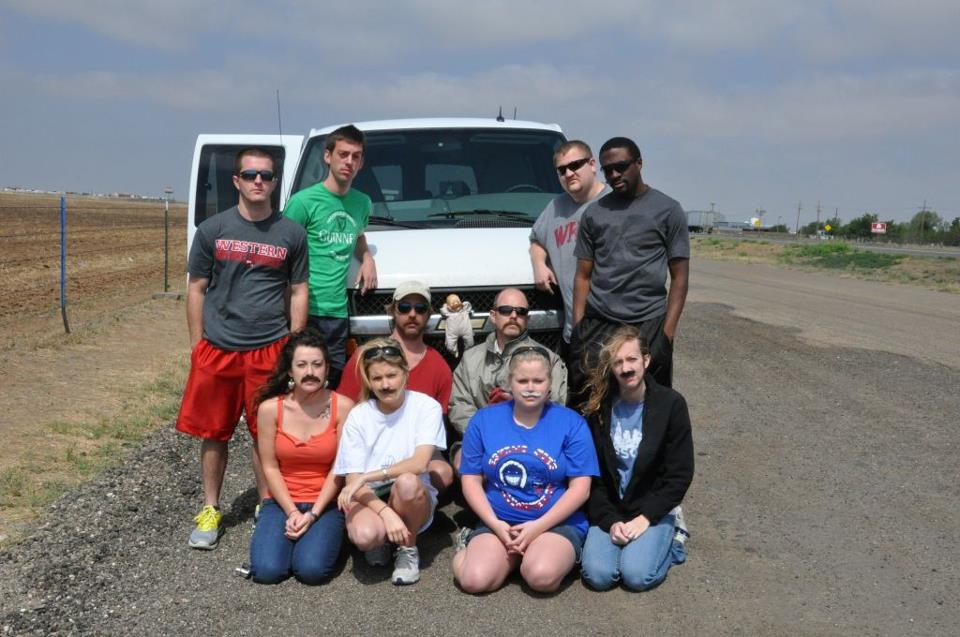
We ate lunch in Boise City, Oklahoma and hung out in the local park while we waited for thunderstorms to develop. After thunderstorms started to form, we moved eastward to intercept and found ourselves in the parking lot of an establishment known as Brown’s Meat Market. An alpaca, a scavenging dog, and hacky sack provided entertainment while we waited for our storm to strengthen. We also were sustained by the awesomeness of our mustaches:

Get on our level

After it became clear that the storm we were watching was struggling to maintain itself, the decision was made to dive southwestward toward the westernmost storm in the line of convection. This storm displayed some persistent midlevel rotation and produced some sizable hail according to radar estimates. While not as spectacular as some of the previous supercells on the trip, it still produced some impressive lightning and mammatus clouds.

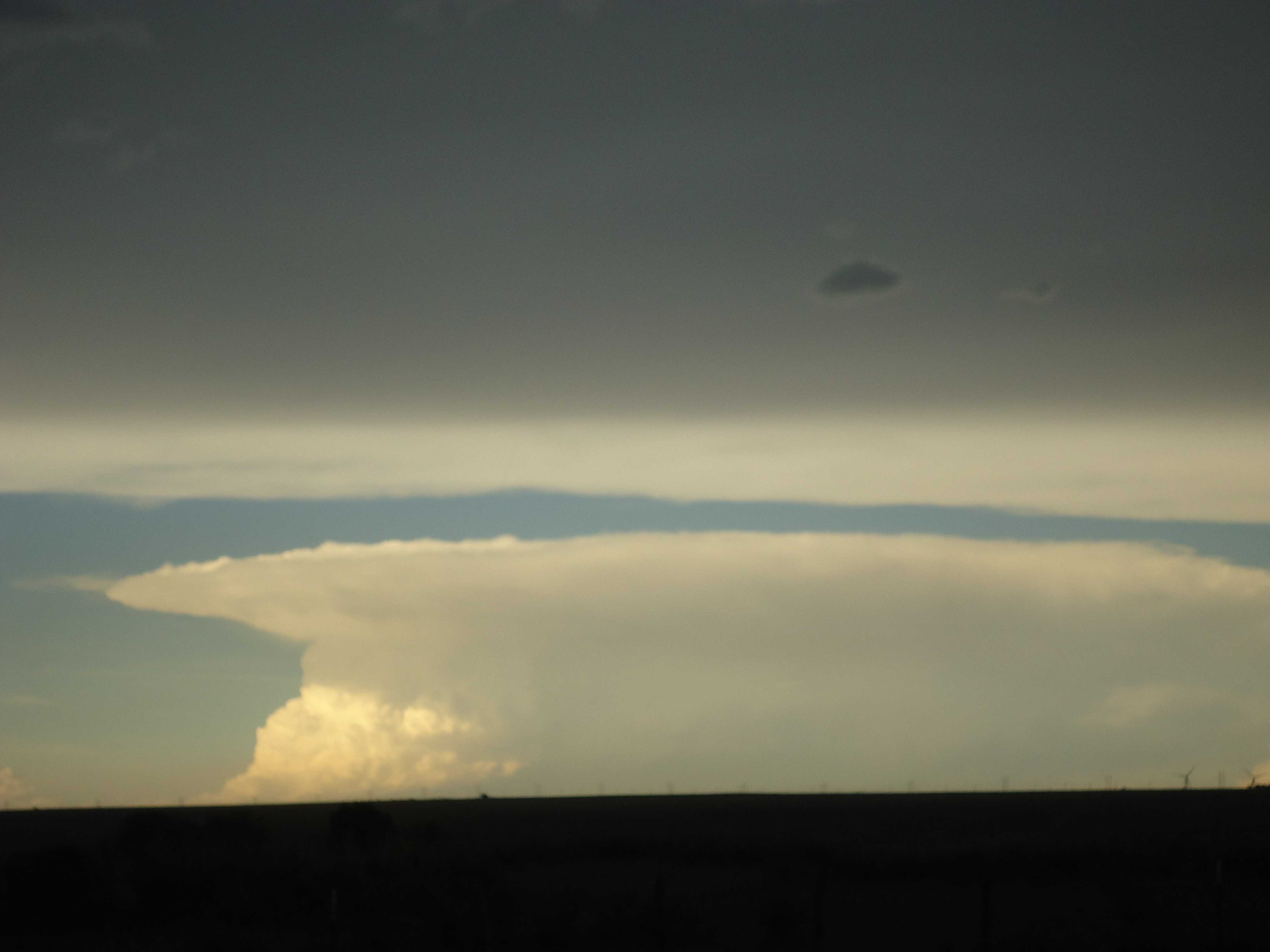
While monitoring this storm’s progress, we also were able to observe a textbook anvil and overshooting top associated with a thunderstorm near Amarillo, TX (over 70 miles to our south).

When our storm began to become disorganized, our class decided to bail and set out for our hotel in Borger, Texas. This was more than likely our last chase day, as prospects for tomorrow look dim and the day will probably be spent traveling back home. By any measure, this class has been a success and an unforgettable experience for everyone involved!

Posted in Uncategorized | Comments Off on Day 12 Recap

Day 11 Recap

  Due to the main severe risk being too far east to chase, we left Amarillo, Texas, this morning and headed west toward Raton, New Mexico, in the hopes of chasing upslope thunderstorms. On our way out of Amarillo, we visited the famous Cadillac Ranch, where ten Cadillacs are planted at an angle in the ground.

Cadillac Ranch

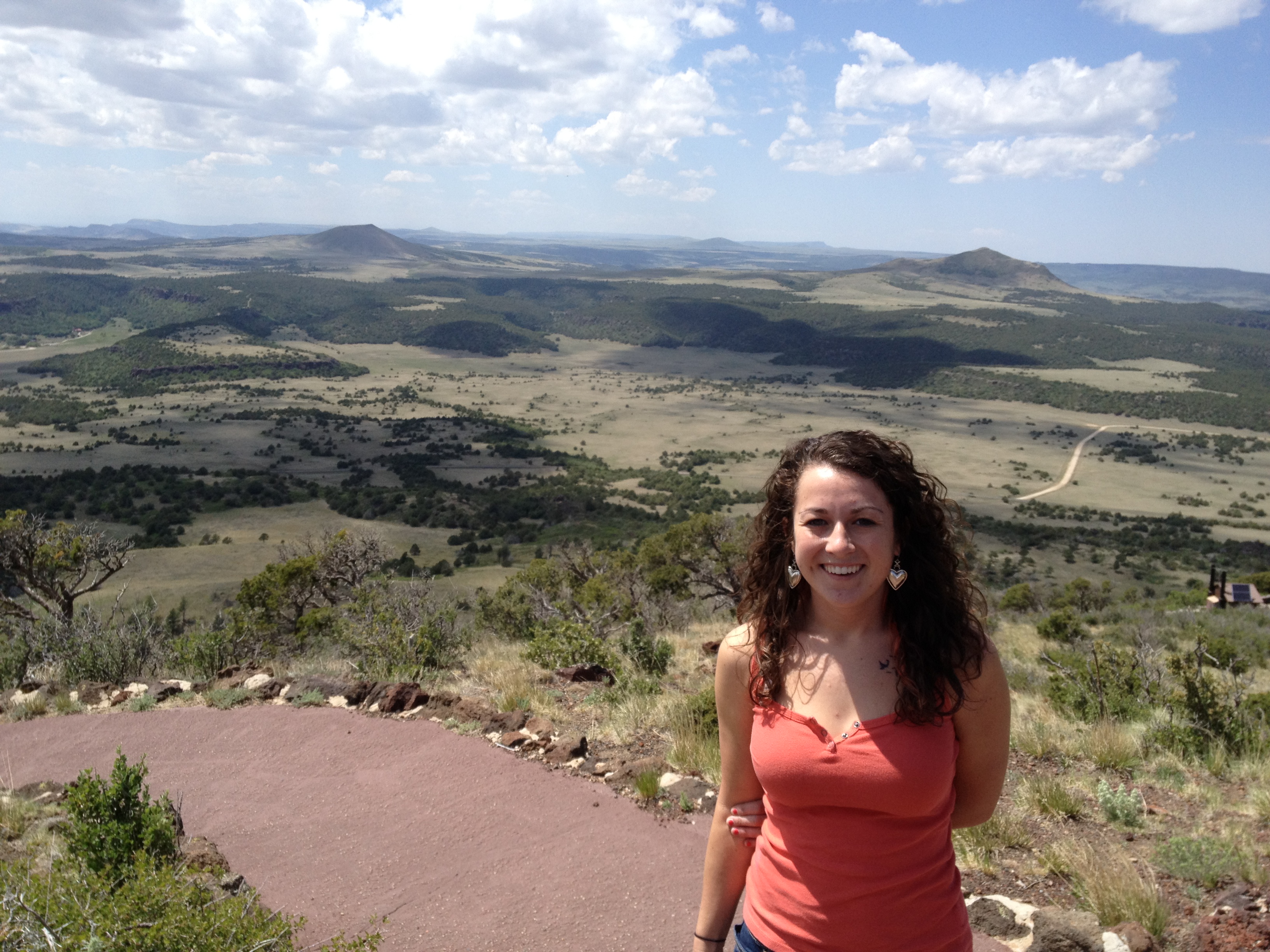
We stopped for lunch in Dalhart, Texas, for lunch at Taco Juan’s, where their burritos are said to be “Juan in a Million.”  Continuing west, we stopped in Clayton, New Mexico, to view and tour the Capulin Volcano National Park.  This volcano is no longer active, and its last eruption was near 60,000 years ago. Dr. Durkee drove the van up the volcano, and we then got out of the van and hiked over the rim of the cinder cone volcano.  This task proved to be more daunting than originally observed, and many of us became exhausted quickly.  However, we all made it to the bottom with no injuries or sickness!

Capulin Volcano National Park entrance

Student Chandler Santos as we scale the volcano

View from the top of the Capulin Volcano in New Mexico

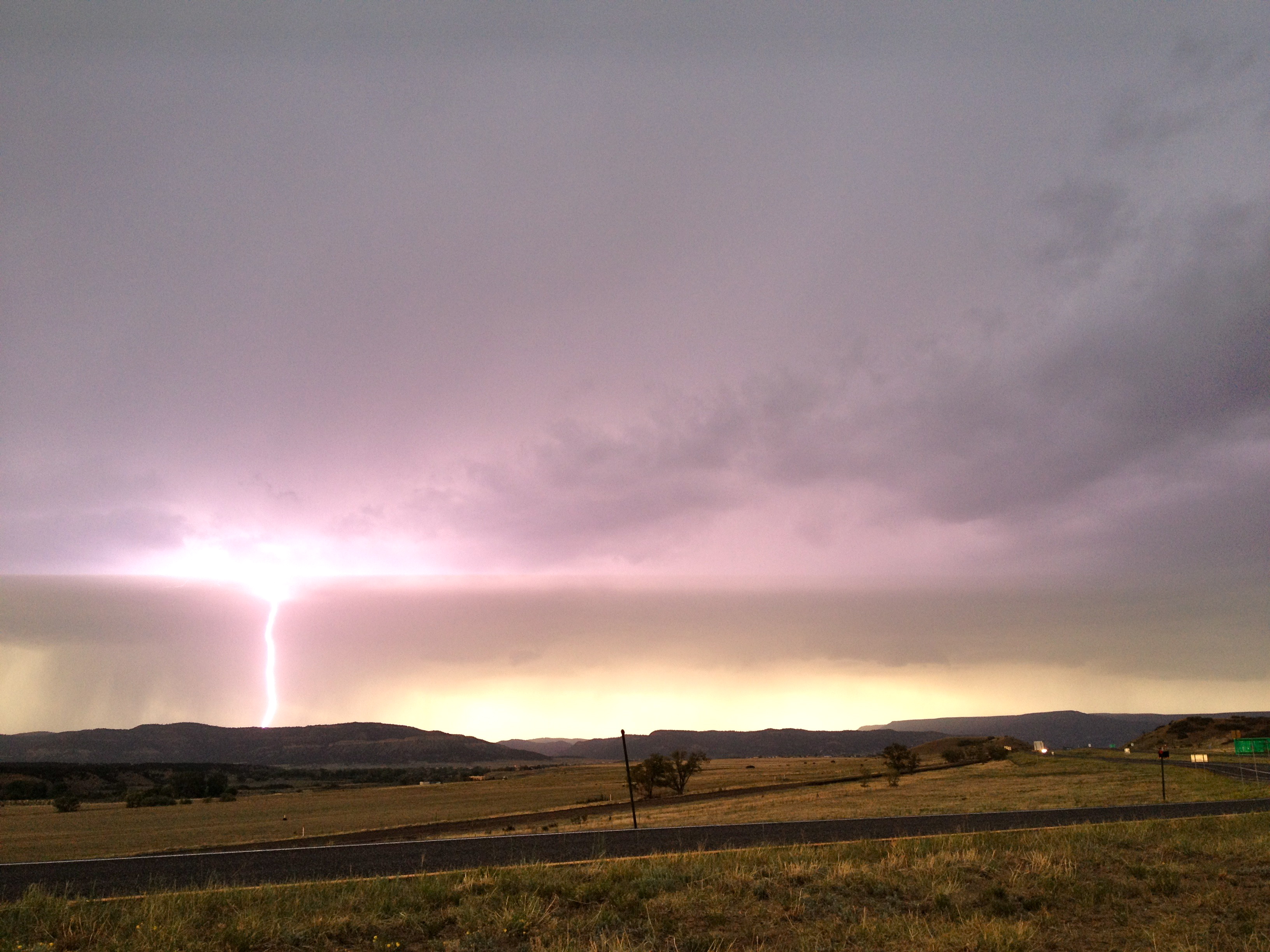
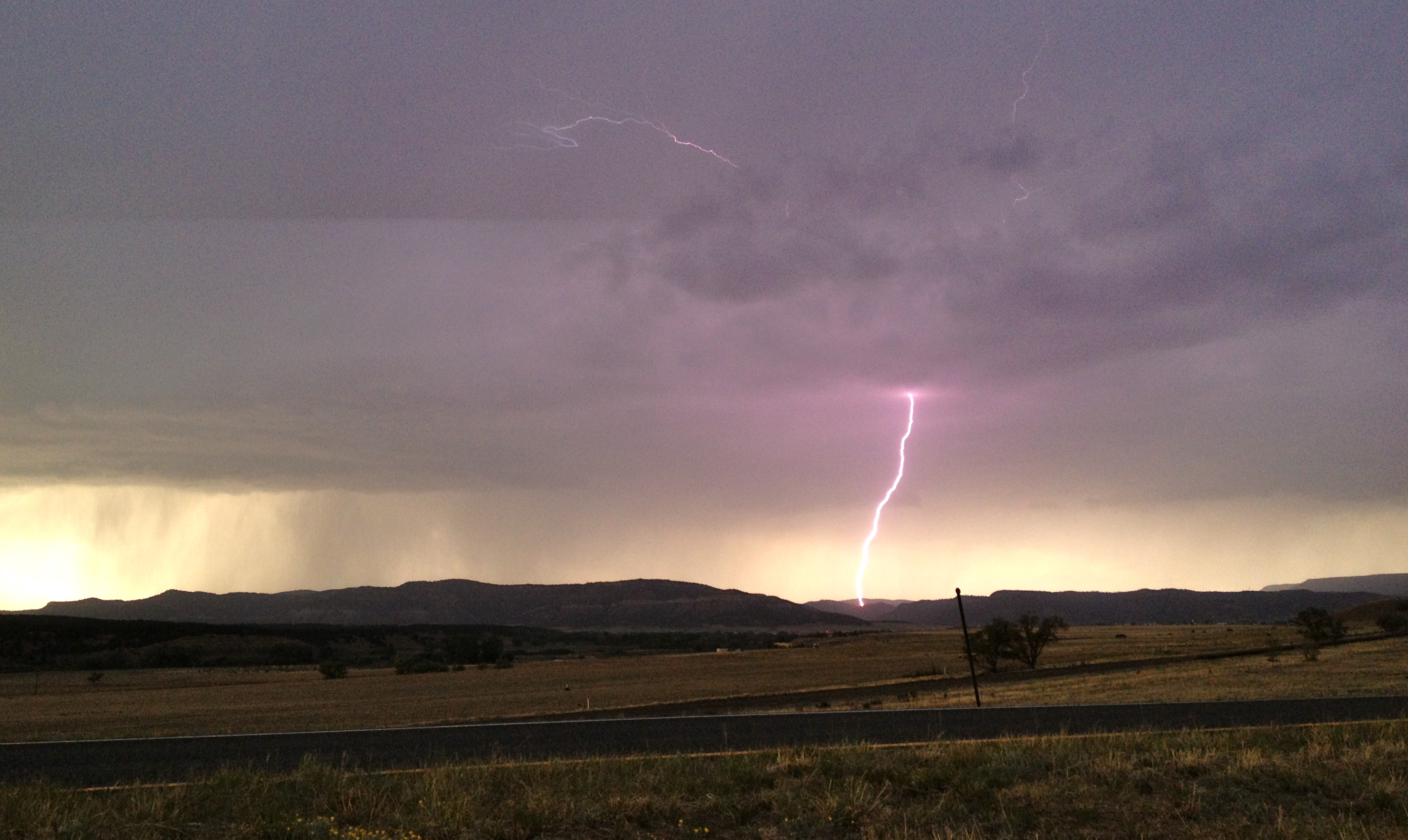
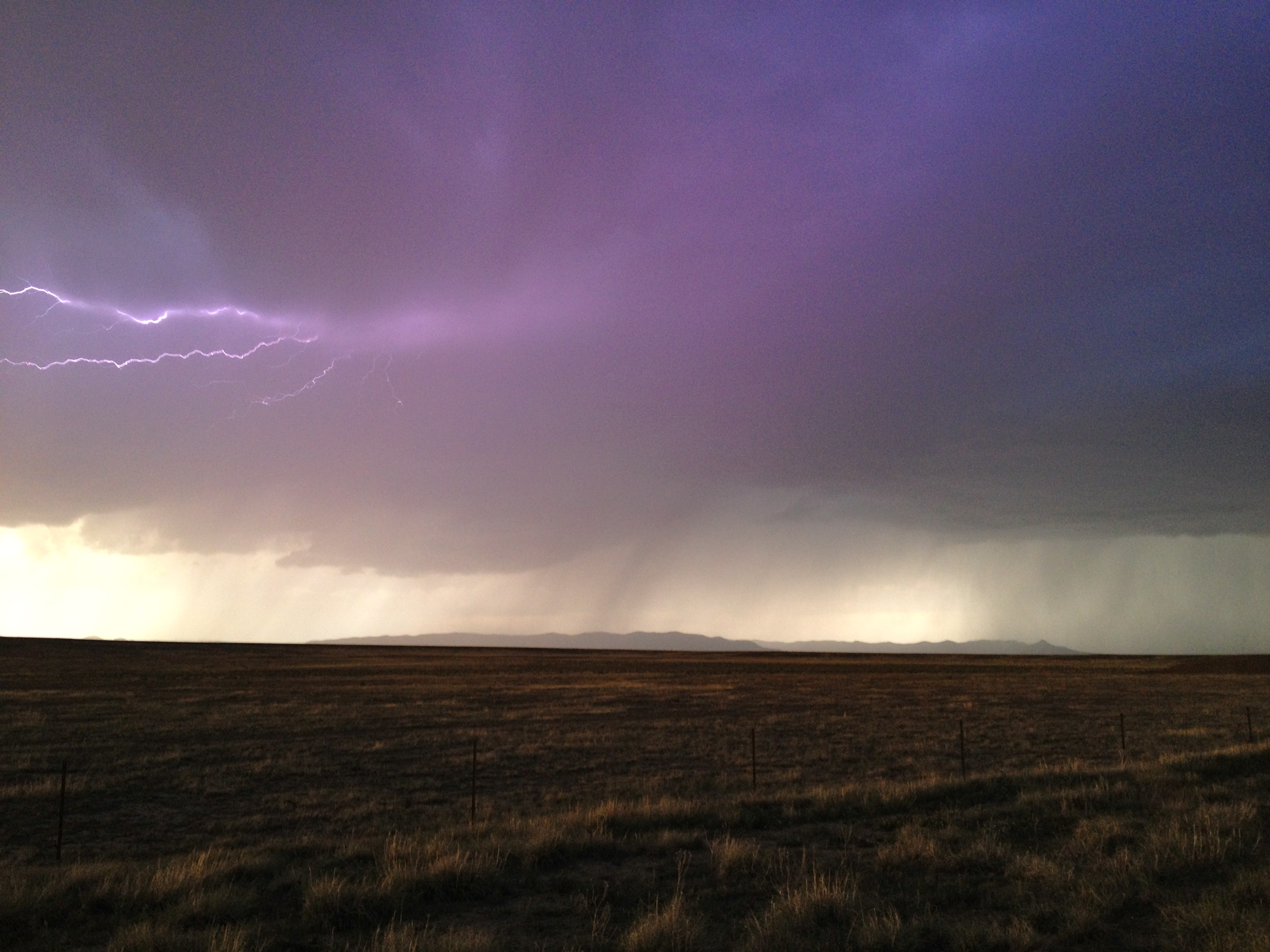
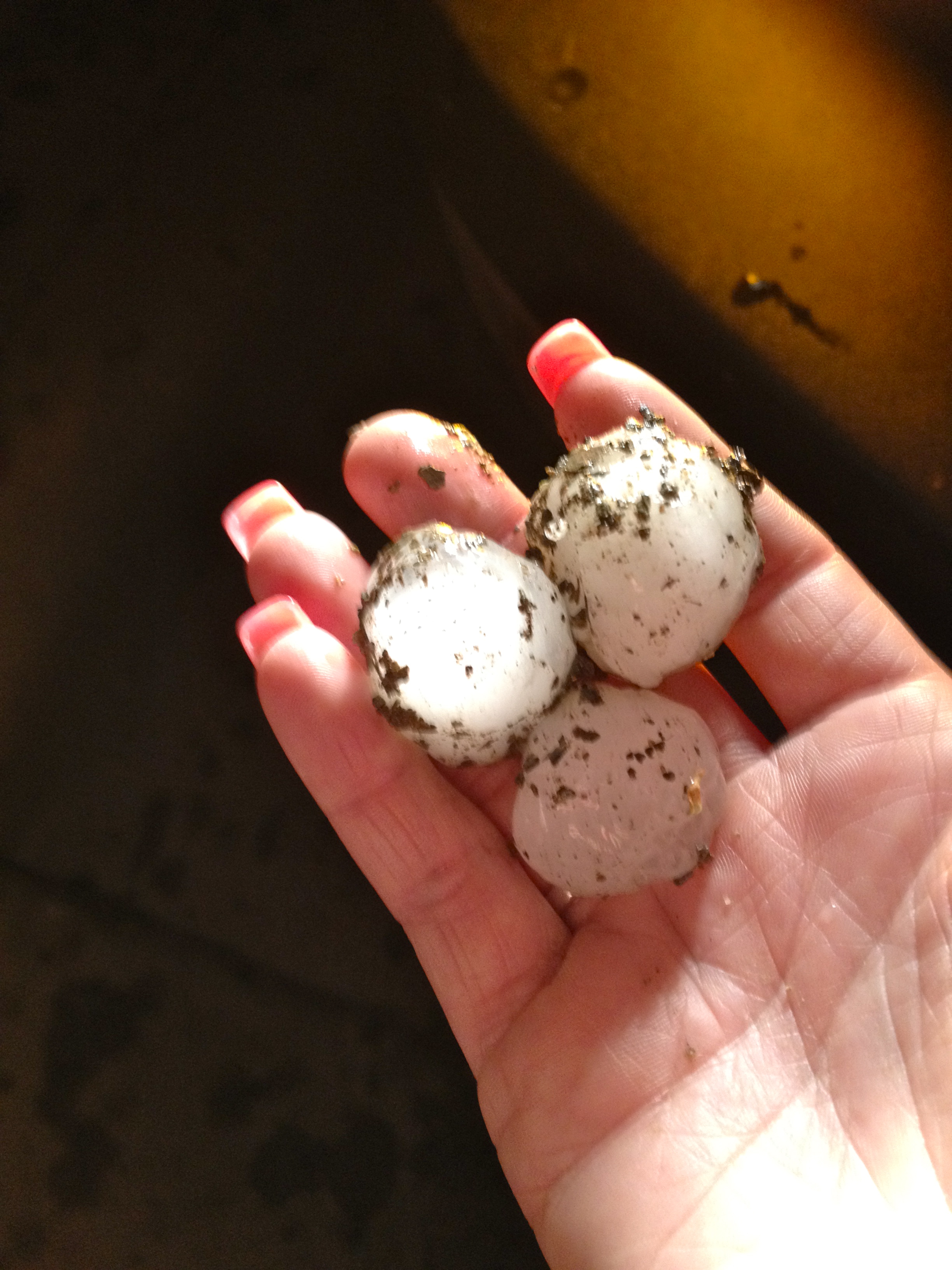
We arrived at our hotel around 4:00 (Mountain Time) this evening in Raton, New Mexico.  After a exhausting day at Capulin Volcano National Park, many of us changed clothes and freshened up.  Around 7:00 (Mountain Time) we headed toward Trinidad, Colorado, to view a storm with impressive lightning. We then headed south toward Maxwell, New Mexico, in order to intercept more promising storms. Radar indicated weak rotation associated with these southern storms.  A hail report stated that quarter inch hail covered Interstate 25 up to one inch deep.  While traveling north toward Raton, we were caught in a hail shaft, but most of the hail was dime size.  We retreated south to avoid damage to the van. When we returned north toward Raton, we were caught again by larger hail, this time quarter to ping pong size.  We again headed south toward Maxwell, New Mexico, and took cover under an overpass to observe the hail and again avoid damage to the van.

Lightning south of Raton, New Mexico

Panorama of storm south of Raton, New Mexico

Lightning south of Raton, New Mexico

Lightning near Maxwell, New Mexico

Hail in Maxwell, New Mexico

After viewing storms, we enjoyed Mexican food at Sands Restaurant in Raton, near our hotel.  Tomorrow we are meeting at 10:00 (Mountain Time) to discuss tomorrow’s chase options.

Written by Tami Gray

Posted in Uncategorized | Comments Off on Day 11 Recap

Day 10 Recap

We woke up in Stillwater Oklahoma after a successful day the previous day with insane structure on storms we witnessed just northwest of Oklahoma city.  Storms continued to persist throughout our region along a boundary that was left from the decaying storms throughout the night, and it was thought that this boundary would help to increase the threat of tornadic storms in northwestern Oklahoma.  A broad surface thermal low situated on the TX/OK border with an attendant upper level shortwave would provide added forcing to an already potent thermodynamic setup situated in western Oklahoma.  A clear dryline bulge was forecasted to enter extreme southwestern Oklahoma initiating storm development, but another noticeable dryline bulge was depicted along a tight gradient from the panhandle of Oklahoma to around the El Reno region in west-central Oklahoma.  The upper dryline bulge with both better dynamic and thermodynamic support seemed to be the best play for severe storms in the afternoon.

We decided on the location of Alva Oklahoma for storms to initiate, but as we continued to monitor data throughout the treck northward, it started to become clear that our location was in fact not the best location to see storms.  SPC mesoanalysis continued to depict a pocket of very shallow low level lapse rates with a developing surface low forming much further south than anticipated around the Wichita Falls, TX region.  Given our far location from storms that began to initiate, we headed west to hopefully intercept storms along the border of Oklahoma and Texas next to Woodward, but no storms ever initiated.  We ended up staying in Amarillo Texas, enjoying a fantastic dinner at the well known restaurant Big Texan! I took on the man vs. food challenge (and lost).

The Big Texan Restaurant


Man vs Food Challenge. Includes a salad, potato, jalapeno pepper, and large 18oz sirloin steak!

Posted in Uncategorized | Comments Off on Day 10 Recap

WKU Storm Chase Day 9 Recap

After spending the night in Wichita Falls, TX, the group had decided on an initial target of Weatherford, OK with the anticipation of driving northward to position ourselves near the triple point. The triple point is defined as the point where 3 boundaries intersect and in this case was where a warmfront, coldfront, and dry line intersected with a developing low pressure center in western Oklahoma.

Aside from the increased lift and shear provided by the triple point, this target was chosen because an axis of instability with CAPE values near 4000 J/kg resided up to and near the triple point, under a very weakly ‘capped’ environment. Also an upper level impulse with northwesterly flow was forecast to slowly deepen and provide an environment favorable for supercells or multi-cellular storms.

The only limitation from today was the higher cloud bases and very modest low-level flow, that likely limited the tornadic threat. Nonetheless, with minimal expectations of tornadoes, we knew we would at least get to see some terrific structure, and boy did we!

After finally stopping for a sit down lunch, and one other than Subway, moved northward to the warm front and watched cells initiate near O’Keene, Oklahoma. After some initial linear development the southernmost cell began to rotate and move southeast towards Kingfisher, OK.
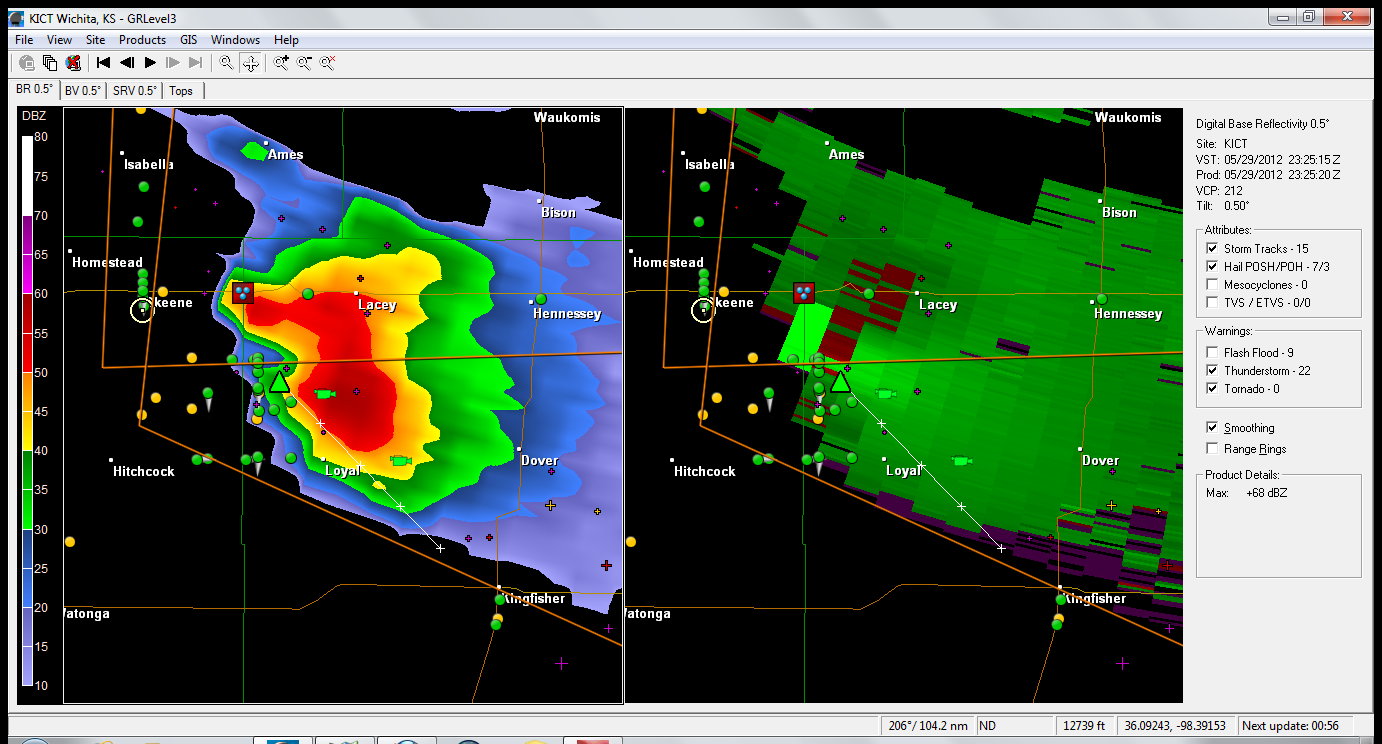
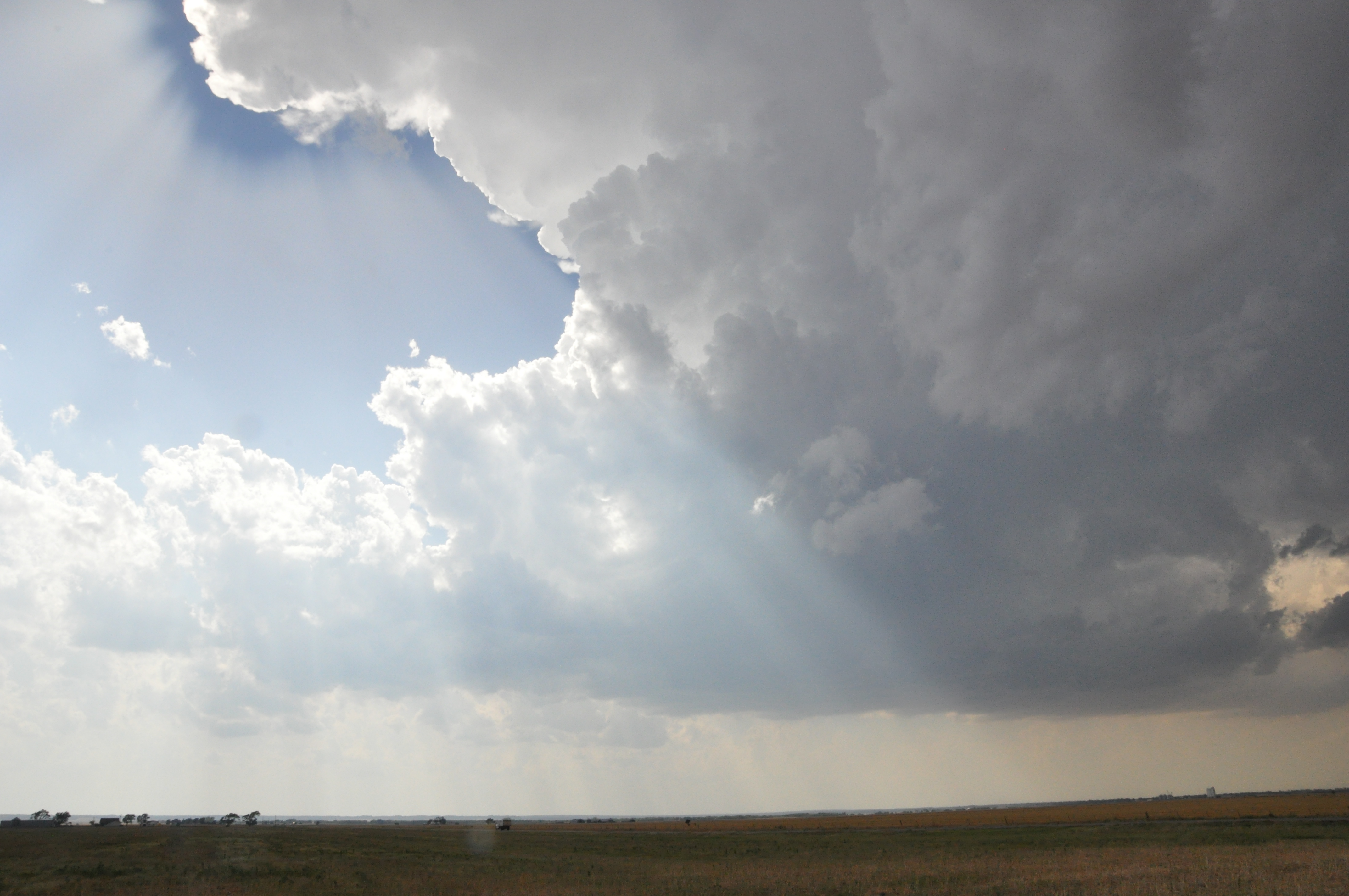
Photo by: Nathaniel Shearer

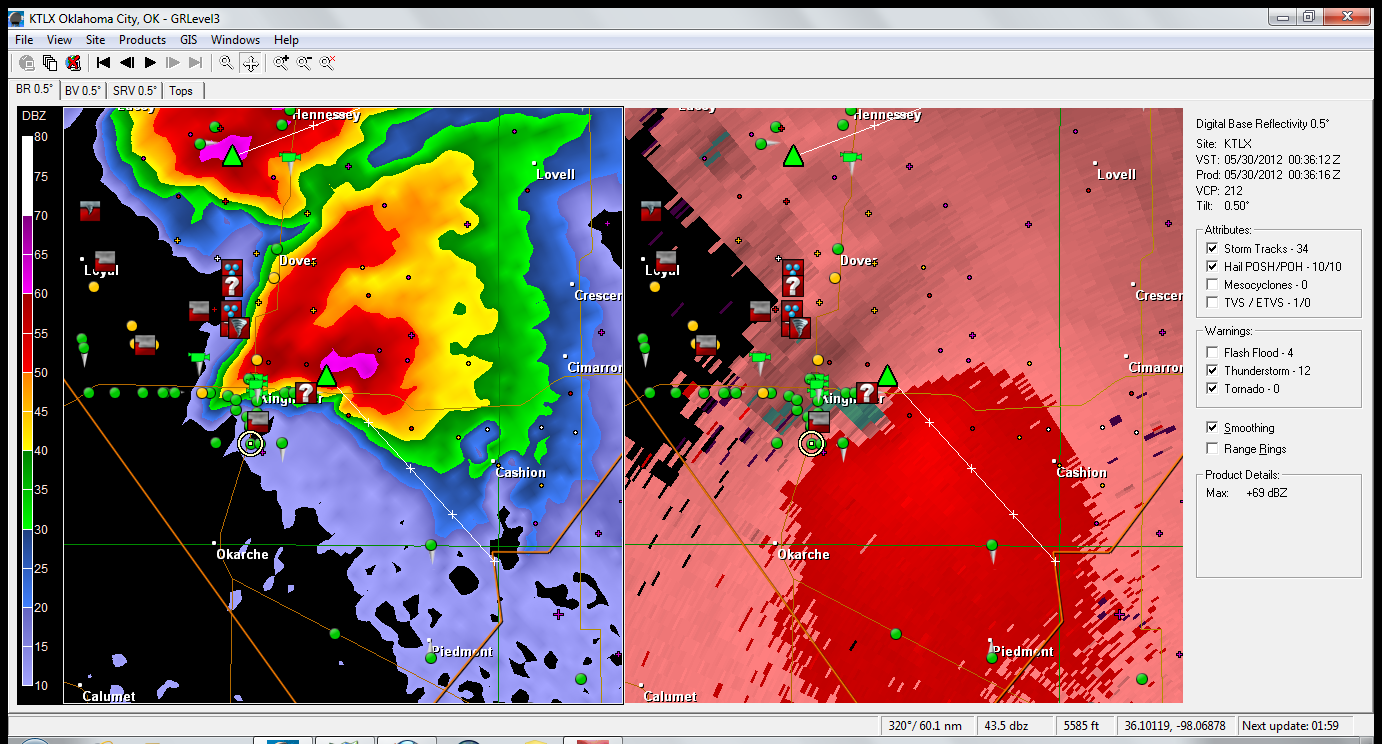
Not long after, the storm began to progress and root itself in the boundary layer,  and the group got to witness a wall cloud that briefly took shape as the storm cycled In Kingfisher.
Kingfisher Wallcloud. Photo by Nathaniel Shearer

Near Peidmont, which is a suburb of Oklahoma City, the storm quickly intensified, as another storm from the south interacted with it and was absorbed into the parent storm’s updraft. This likely caused an increase in low level shear and lead to the birth of what may have likely been a rain wrapped tornado. There were reports from other spotters that this indeed was the case, but was not readily visible from our location.
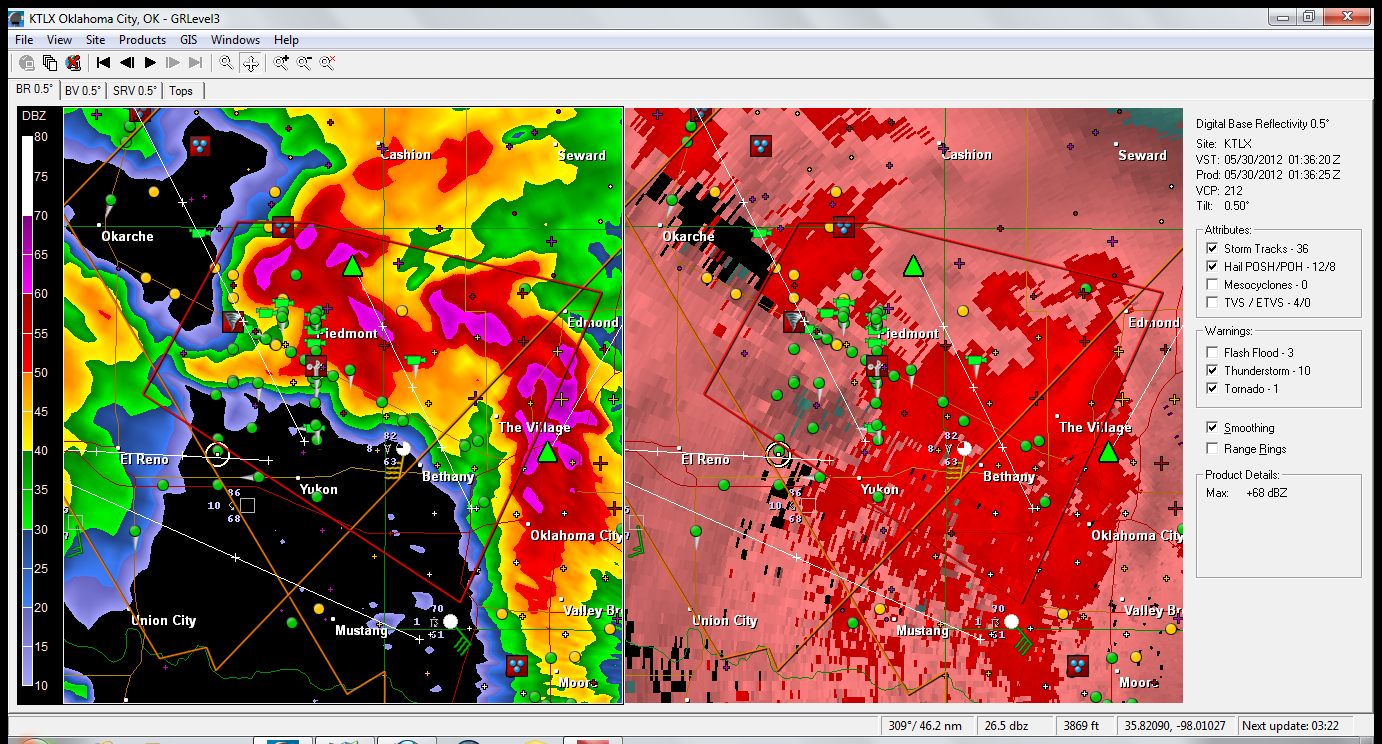
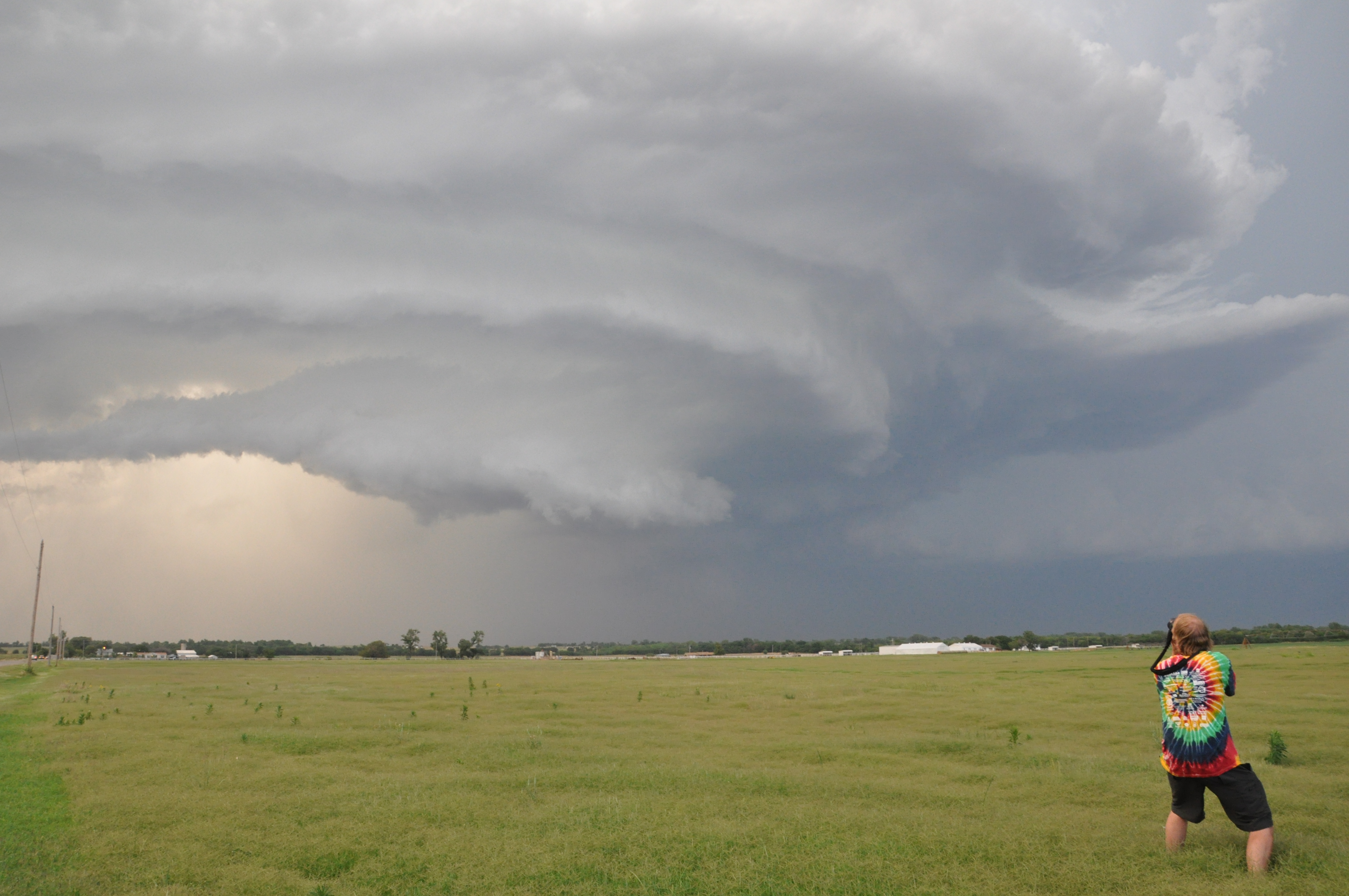
Photo by Nathaniel Shearer

What was visible from our safer location, was truly the most remarkable structure in a thunderstorm that I have yet to see. It by far exceeded the ‘idealized’ storm that is often noted in textbooks, and the students got to witness this first-hand in the Meteorology laboratory that is the American Great Plains. It truly is an awesome sight that a picture can do no justice in describing.

Photo by Emily Yates

Despite narrowly ‘missing’ a tornado, the forecasted main risk for the day was high winds and large hail which all occurred. We were able to witness the high wind after dark (no pictures) as a 71 mph wind gust was recorded at a Oklahoma mesonet station near our location near Minton, OK. The high winds presumably knocked down power lines and we observed many large ‘power flashes’ as transformers blew and knocked out power to the nearby town. Also many reports of hail the size of 5″ were collected from this massive storm.
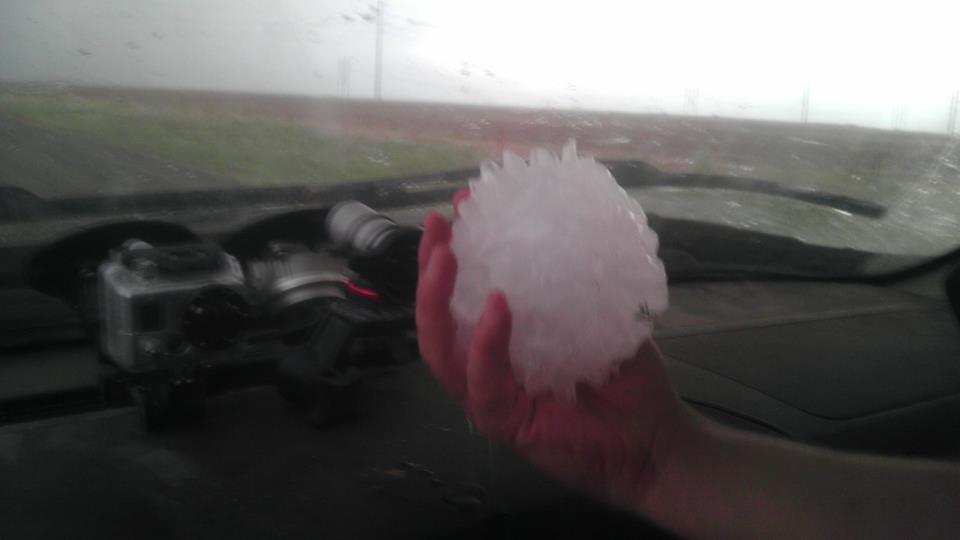
Photo Taken from Reed TImmer's facebook fan page

Another special treat was we happened to see Mike Bettes and the Weather Channel’s crew do a live broadcast on the side of the road as we all watched a nice storm west of (and out of) Oklahoma City, just after dark.

After a long and successful day, we have finally settled down in Stillwater, OK with eyes on another great chase day tomorrow, which looks to be as good, if not better, than today.
Posted in Uncategorized | Comments Off on WKU Storm Chase Day 9 Recap

WKU Storm Chase Day 8

The WKU Storm Chasers rose this morning in Salina, Kansas and, after a gas station breakfast, hit the road south. Our plan was to first drive southwest of Wichita Falls, Texas, where we could reassess the situation.

At 13Z this morning (May 28), a cold front extended through western Oklahoma and north-central Texas. As we drove early this afternoon, a cumulus field formed in a band along the dry line in west Texas as well as along and ahead of the cold front. By 4:15 pm, a few nice towering cumulus clouds had formed near Seymour, Texas. There was good mid and upper level shear of around 30-40 knots, as evidenced by the leaning towers.

Leaning towers of Cu.

Mixed layer CAPE values were around 3000 J/kg, and there was virtually no CIN. By mid-afternoon, temperatures were in the 90s with dewpoints in the 60s.

Cells started popping and strengthening along the boundary, and 2-inch hail was reported four miles west of Greyback, TX. The line continued to move east-southeast, and we tracked one storm in particular. At one point, a clear wall cloud was visible. However, no funnel or tornado seemed likely. Damaging winds and hail were the main threats with this line.

The WKU Storm Chase class did experience a new first today, however. We drove out ahead of the line, parked under the carport at the Pipeliner Inn in Olney, Texas, and let the storm blow over us.

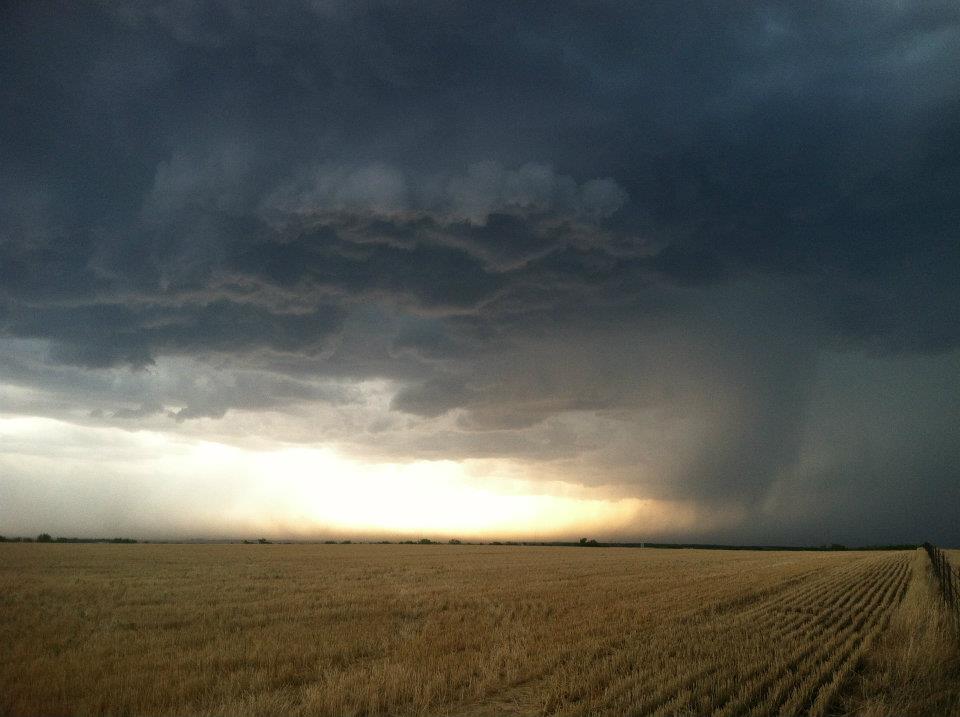
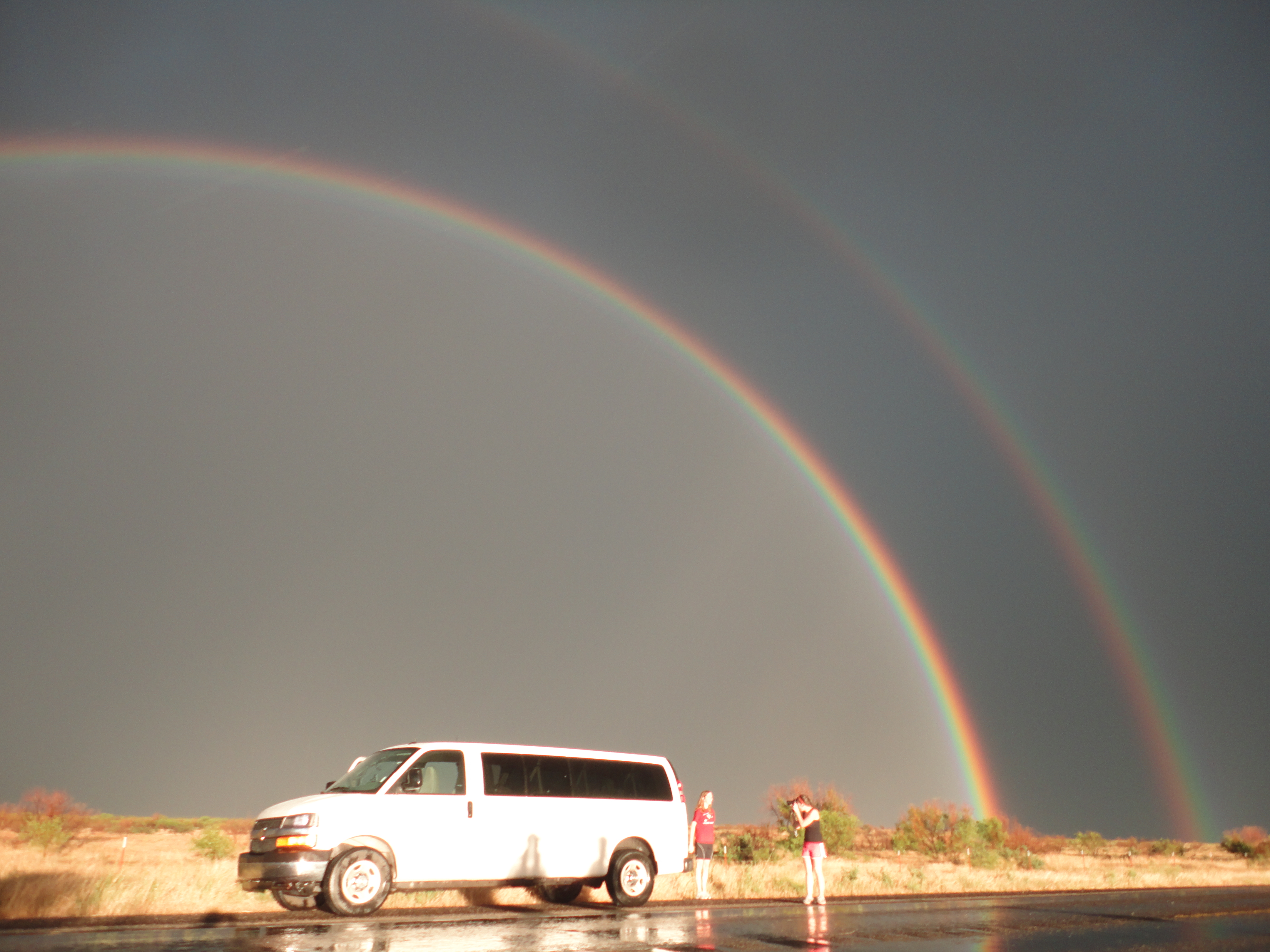
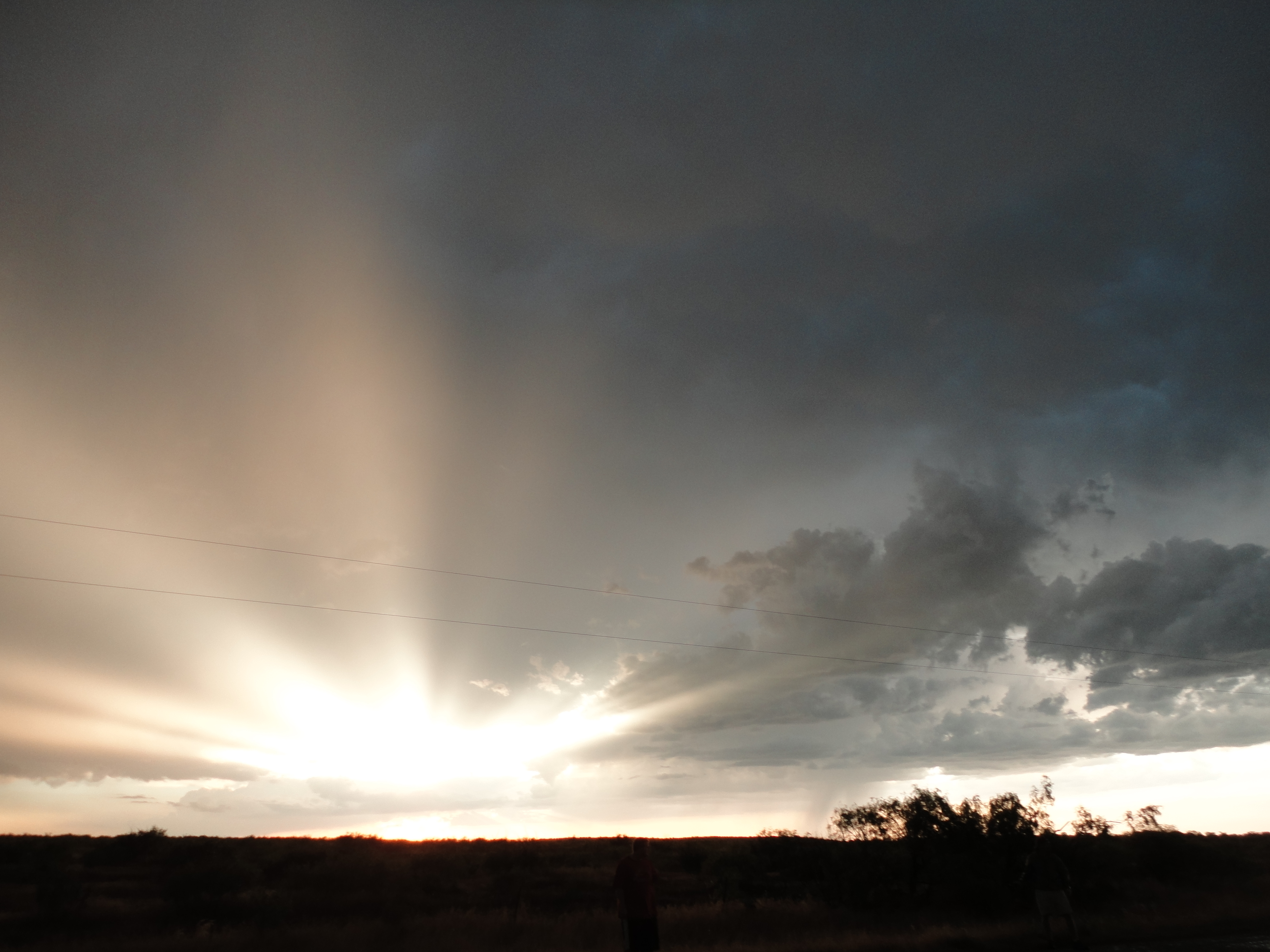
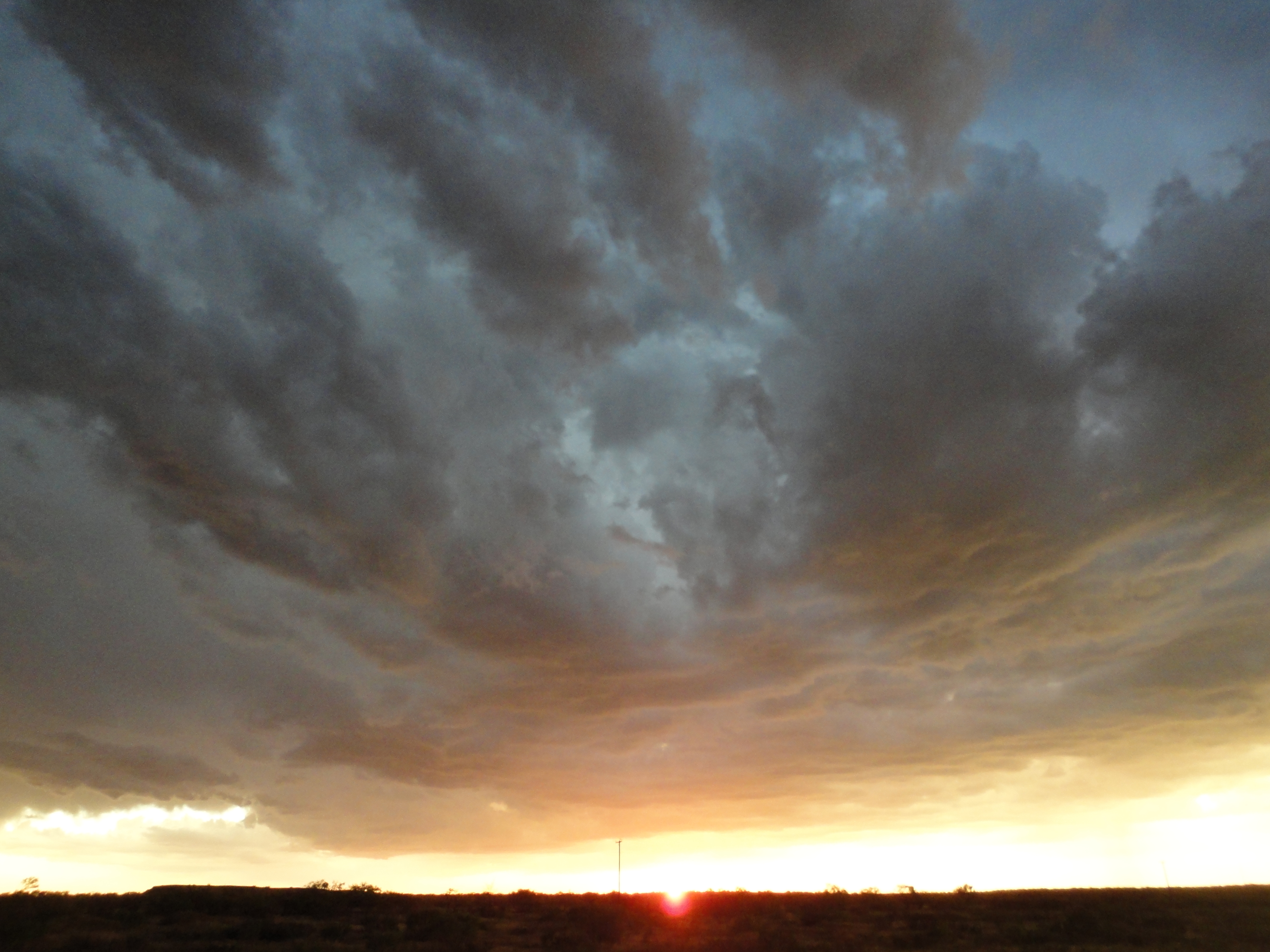
The most memorable portion of the day came during the evening as we made our way back to the hotel. We drove north out in the middle of nowhere in Texas, with the sun setting to our west, when a double rainbow suddenly became visible to the east. It was a double rainbow all the way across the sky. What could it mean? None of us had ever seen violet so vivid. As if that wasn’t enough, lightning was lighting up the sky in every direction. Needless to say, some mesmerizing images were shot of lightning along with the double rainbow and sunset. We will stay in Wichita Falls, Texas tonight and shouldn’t have to drive too far for action on Tuesday. The SPC currently has a slight risk out for most of central Oklahoma.

Posted in Uncategorized | Comments Off on WKU Storm Chase Day 8

Storm Chase Day 7 Recap

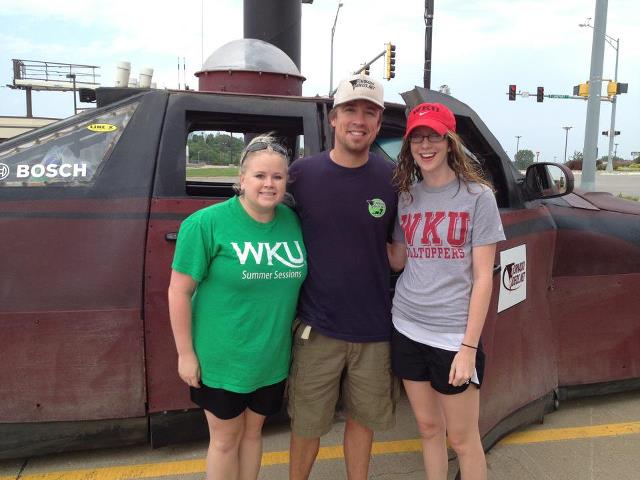
Today began in Sioux City, IA. We stopped to get gas and preform the necessary window cleaning and Rain-X applications. While at the gas station, we noticed that Reed Timmer, storm chaser with Tornado Videos. net, and his team were parked across the street. Becca Ollier and I walked over and got our picture with him. He was pleased to find out we were fellow chasers.

Students Emily Yates and Becca Ollier meet storm chaser Reed Timmer

The discussion for the day was held in the van on the way to our target. Today was my day to give the forecast discussion. I began my discussion by naming my target to be Hays, KS. This target was generally agreed upon by the students as well as professors.

The set up for the day began at the 250 mb level with an upper level low situated over Idaho and Montana. A trough axis was situated just over the four corners region with a potent jet streak at it’s base with winds in the center reaching 100 kts. This jet streak was sustained into the 500 mb level with winds in the center around 70 kts. The surface theta-e analysis showed a moisture axis stretching from the gulf into Minnesota. The 850 mb mixing ratio analysis showed a moisture convergence boundary draped from Kansas into Nebraska. A weak circulation was beginning for the formation of a low in north east Kansas. A cold front was draped from Minnesota down through the Dakotas and to the east of Kansas and Nebraska. As the weak development of the low progressed in eastern Kansas, a warm frontal boundary also evolved. The dry line was located just to the east of Kansas and Nebraska and was forecast to move into the states as the day progressed.

The general discussion was that the dry line was the best target for the initiation of storms. Dew points were forecast to be in the mid-50’s to 60’s over the area. CAPE (convective available potential energy) was forecast to be 1000-1750 j/kg with only minor CIN (convective inhibition). Surface to 500 mb shear was forecast to be anywhere from 30-50 kts. The LCL levels were forecast to be high, leading us to decide that any storms that developed would have high bases and the tornado threat would be low. The thought was also that storms would be more linear in nature rather than individual cells. The hope was that the development of the low in eastern Kansas would help the winds begin to back.

The Storm Prediction Center had placed our target area in a moderate risk for today. This was based upon the likelihood of widespread wind and hail events.

We got lunch at a Subway in York, Kansas. We then decided to drive into Smiths Center, KS and take a moment to relax and look further at developing data at Wagoner Park. By 4 pm, we had decided to move to Athol, KS as we watched storms develop to our north and south east. Storms continued to develop along the dry line throughout the day and we moved along it targeting storms we thought to be the most promising. We even ventured across the Nebraska border for a few cells.

Around 7 pm we were east of Gaylord, KS watching a storm to our west. We began to notice the cell to our south east beginning to move to be ingested by the storm we were on. We were hopeful that the interaction of these two storms would allow them to amplify and begin to organize some kind of circulation. The cells did merge and intensify initially. However, no substantial circulation evolved.

This photo of radar was taken around the time when the two cells to either side of the blue indicator (our location) were about to merge.

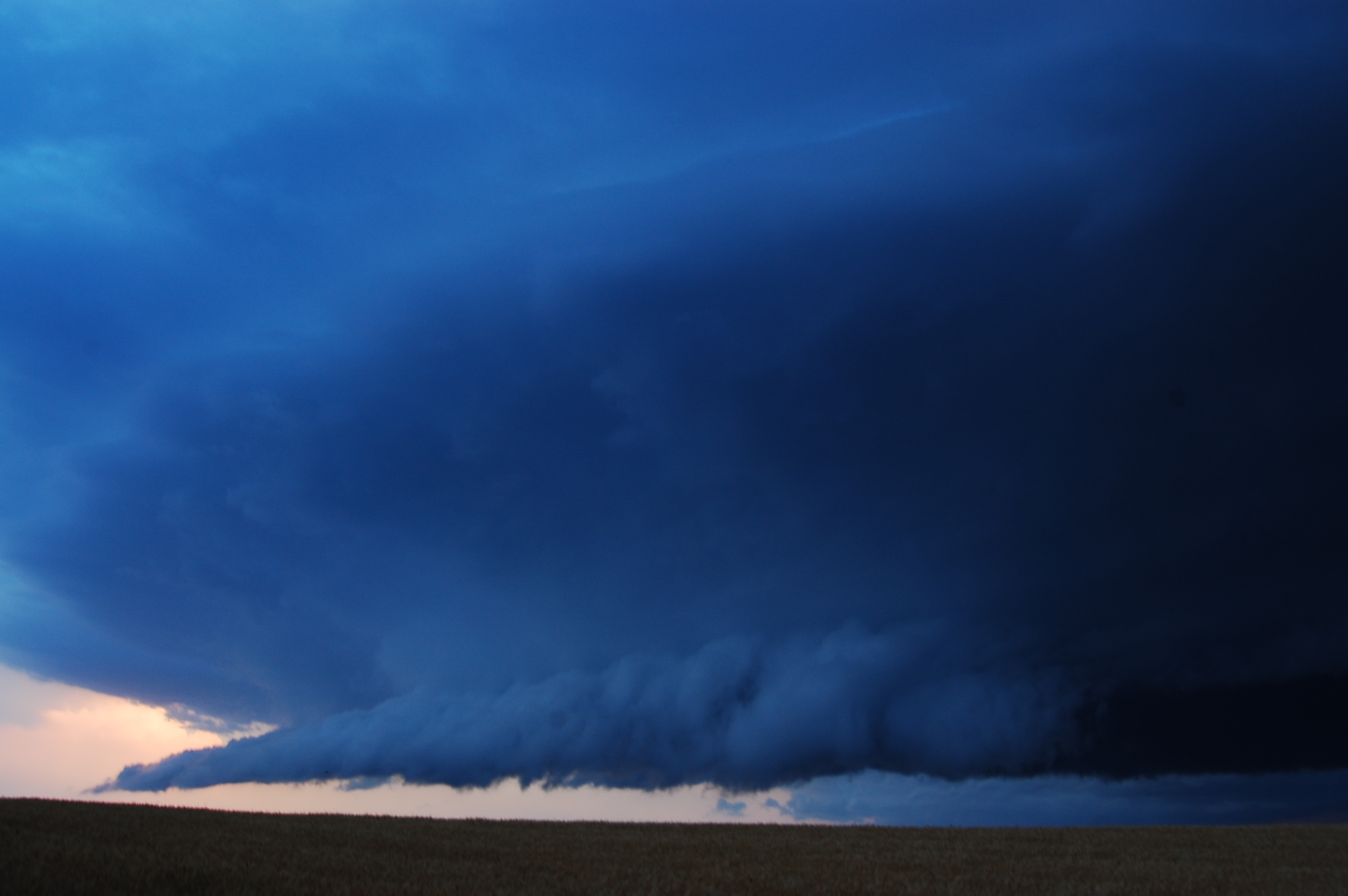
As we neared the end of the day, the storms had become more linear. We caught a view of a beautiful shelf cloud between Gaylord, Kansas and Smiths Center, Kansas. We also stayed around long enough to feel the winds of the associated gust front. We then began to travel east to catch another glimpse of it.

This shelf cloud was captured around Smith Center, KS. Photo taken by Emily Yates.

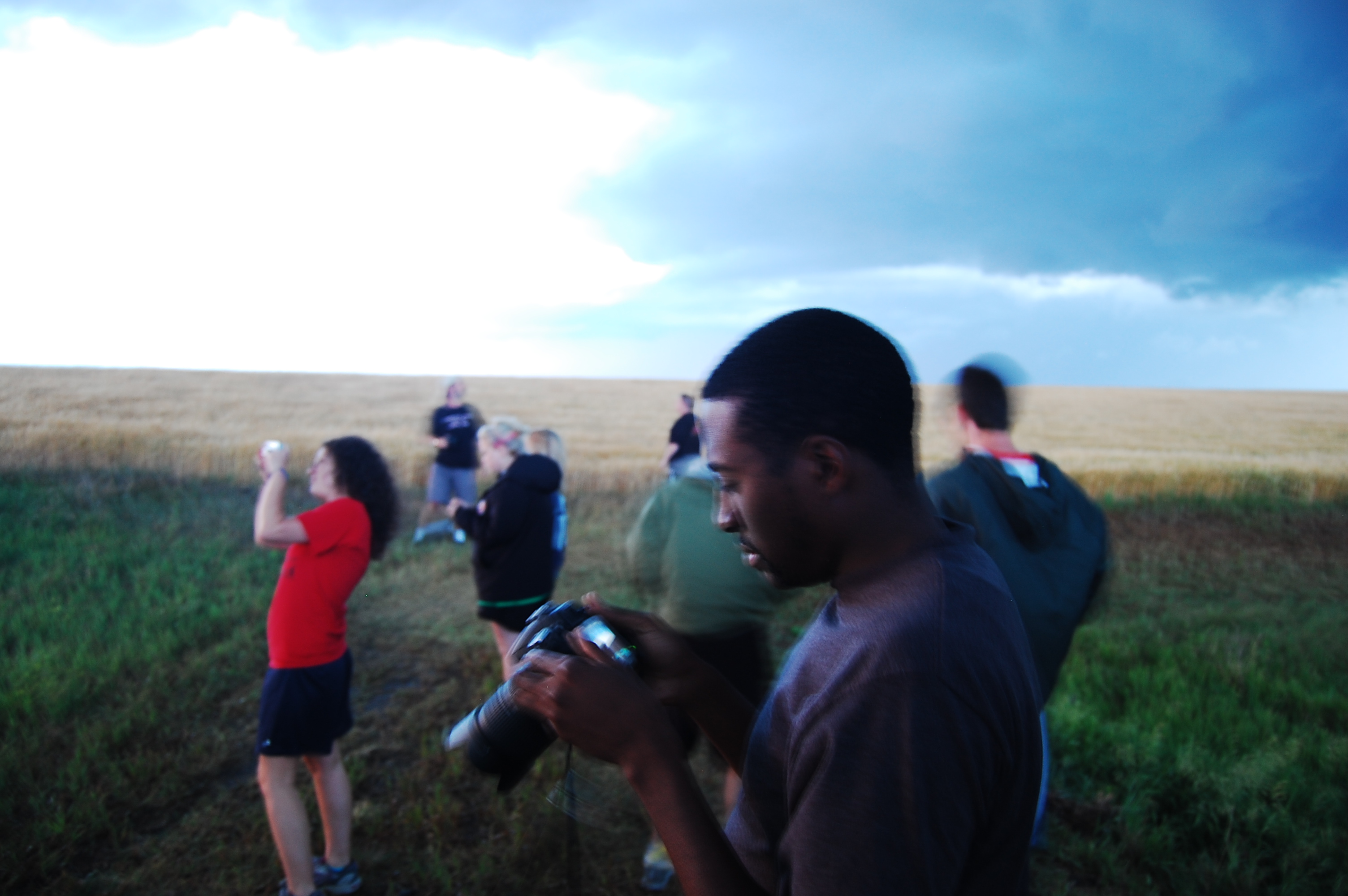
WKU Storm Chasers as the gust front moved through. Nathaniel Shearer adjusts his camera settings to better document the storm.

As we began to head back our hotel, we were able to see another beautiful lighting show. We stopped off in Cawker, KS to see the worlds largest ball of twine on the way back to our hotel. Weare staying in Salina, KS for the night

Posted in Uncategorized | Comments Off on Storm Chase Day 7 Recap